R2A2 (Roles, Responsibilities, Authorities, and Accountabilities)
R2A2 means roles, responsibilities, authorities, and accountabilities. Unclear R2A2 may persist because nobody owns the task of finding and resolving gaps. Investigating why R2A2 became unclear can reveal problems that a revised job description alone will leave in place.
THE IDEA
The Causes of Unclear R2A2
Unclear R2A2 can help explain why things went wrong. To prevent recurrence, an investigation should also ask why R2A2 became unclear and why the gap went undetected.
So, assume we have a risk that is not being effectively managed (P1) because of unclear roles and responsibilities at an operational level. It's possible to see the following ‘chain’ of reasons explaining this. For example:
Considering Prevention:
- (P2) While there are senior level R2A2, there are no enforced operational roles and responsibilities, because
- (P3) there is a mistaken assumption all people will take up responsibilities voluntarily (or flag this up if it is unclear), but
- (P4) most people are busy and don't have time to resolve these unclarities (after all, not everything can be totally clear), and
- (P1) it's not clear that it's their role to do this (note the circularity of unclear roles here).
Considering Detection:
- (D1) There is no precise, systematic measure to say that R2A2 is unclear, and
- (D2) there is no one in place to proactively take an interest in whether R2A2 is clear (again, a repeating causal factor), because
- (D3) few staff have been trained to do this, or have the tools to understand how to map accountabilities, because
- (D4) it's not clear why you would prioritise training managers on such an esoteric topic. Afterall, it might be argued there is no evidence this is causing a big problem. (And, again, there is a circularity here, because without any information about unclear roles, how could it become a priority for anyone?)
Considering Recovery:
What typically happens is that when an incident arises and a root cause analysis (RCA) is carried out, the lack of clarity of R2A2 can emerge as a causal factor, which is then fixed for that area by pinning down roles and responsibilities at the level of job descriptions and targets for the relevant staff.
The precise reasons for unclear R2A2 will depend on the specific facts of each situation, but the ‘fact pattern’ detailed is not unusual and can be set out in Diagram 6.3.
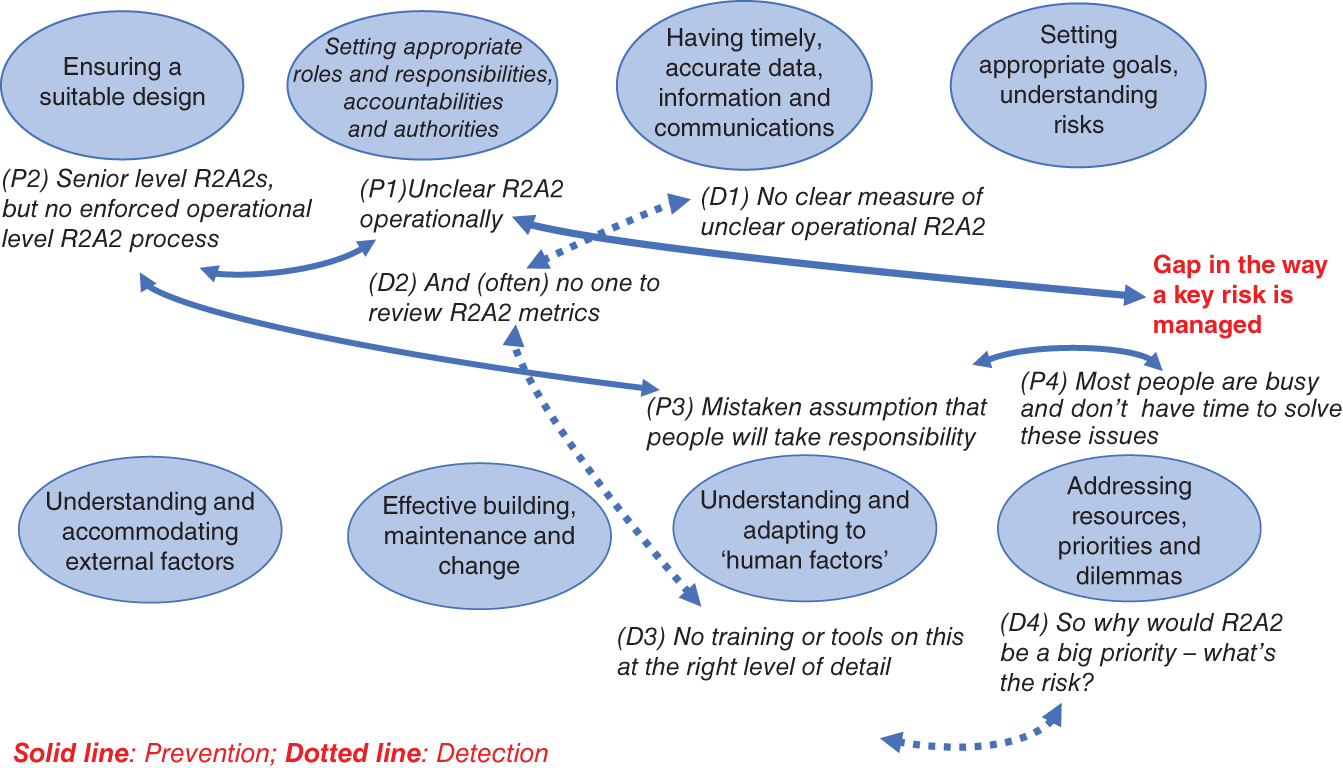
Diagram 6.3 The systemic nature of unclear roles, responsibilities etc. (illustration)
Whatever the analysis for unclear R2A2, simply saying that you need to agree on clear roles and responsibilities for a specific problem area for the future does not address why R2A2 were unclear in the first place, nor does it proactively prevent similar issues from repeating.
Organisations need to be able to detect critical R2A2 gaps and have a clear process for clarifying and resolving role ambiguities proactively as they arise. Pinning down accountabilities at a senior level may not be enough; senior accountable persons would need to ensure a robust accountability framework at an operational level and may even require the authority of the CEO to resolve differences of opinion across departments.17
So, if you hear someone say, ‘we have a culture of unclear roles and responsibilities’, ‘culture’ may be referring to a range of factors that are causing the problem (e.g. as shown in Diagram 6.3). Thus, the ‘eight ways to understand why’ framework, with connections, can provide insights into the factors that might be creating ‘cultural’ or ‘systemic’ problems.18
I am sure the importance of R2A2 at the right level is going to be picked up by more organisations, regulators and others as we look to the future.19 For example, what would an accountability map look like for a zero‐carbon goal for an organisation and its suppliers? And as Artificial Intelligence (AI) capabilities are developed, how should we understand R2A2 between the organisations involved and different regulators across the world? How do we manage gaps and overlaps between regulators when AI may have implications for data privacy, consumer protection, etc., as well?
As work crosses organisational and regulatory boundaries, R2A2 needs to remain clear enough for people to identify gaps and resolve disagreements. A written map is only part of that work: people also need the authority, support, and willingness to carry out their R2A2 in practice.20
When to use it
When conducting a root cause analysis after an incident, include investigation of R2A2 clarity to identify systemic issues.
When designing organizational structures, ensure accountability frameworks are clear at both senior and operational levels.
When training managers, include modules on mapping accountabilities and recognizing signs of role ambiguity.
FROM THEORY TO EVERYDAY LIFE
In practice
Example of a risk not managed due to unclear operational roles
A risk is not being effectively managed because of unclear roles and responsibilities at an operational level. Despite senior level R2A2, there are no enforced operational roles due to a mistaken assumption that people will take up responsibilities voluntarily. Most people are too busy to resolve unclarities, and it's not clear whose role it is to do so.
Detection failure example
There is no systematic measure to detect unclear R2A2, and no one proactively takes interest in whether R2A2 is clear. Few staff are trained to map accountabilities, and it's not clear why training on this topic should be prioritized, creating a vicious cycle.
Recovery example
When an incident occurs, a root cause analysis reveals unclear R2A2. The fix is then applied to that specific area by clarifying roles in job descriptions and targets, but this does not address the underlying systemic reasons for the ambiguity.
A MOMENT TO REFLECT
Put it to work.
Think of a recurring problem in your organization. To what extent is unclear R2A2 a contributing factor? Trace the chain of reasons for prevention, detection, and recovery.
How can you proactively detect unclear R2A2 gaps before they lead to incidents? What systematic measures could you put in place?
Consider a scenario where 'culture' is blamed for unclear roles. Using the 'eight ways to understand why' framework, what specific factors might be driving that culture?
References
- Eight ways to understand why framework — Unknown
CONTINUE THE CONVERSATION
Source texts
- Beyond the Five Whys Root Cause Analysis and Systems Thinking (James C. Paterson)