Eight Ways to Understand Why, with Connections
A decision framework that combines root cause analysis (fishbone diagram) with systems thinking to uncover causal connections between factors, using a prevention–detection–recovery structure.
THE IDEA
Eight Ways to Understand Why, with Connections
The modified fishbone diagram that I shared at the end of Chapter 2 outlined ‘eight ways to understand why’, to arrive at the root causes of a problem. But systems thinking highlights the importance of recognising there may be connections between different causes.
To take a simple, hypothetical, example, building on the earlier discussion concerning electric vehicles: Suppose we set a goal to sell EVs and then find we missed our goal for the various reasons touched upon earlier.
Imagine we investigate what went wrong remembering prevention, detection and recovery and suppose we discover the following additional information:
In terms of prevention (P) – we missed our EV sales goals
- (P1) because of faulty assumptions about sales of EVs to be used as a main car, because
- (P2) we assumed EV sales would keep growing, as they had for years, and also because
- (P3) we had assurances from EVSE providers about their plans to increase the number of charging points, but these were not completely in line with their earlier plans.
Regarding detection (D), we knew we needed to track EV car orders and customer satisfaction with EVs and EVSEs. However,
- (D1) we didn't know enough about what was happening on the grapevine, where stories about ‘nightmare journeys’ were now reaching a tipping point and putting off prospective EV buyers, and
- (D2) we didn't realise that this was going to cause such big problems for our EV sales until it was too late.
In terms of recovery (R) –
- (R1) there was no plan B, for a serious shortfall in the sales of our EVs; as a result,
- (R2) there was no plan in place with EVSE providers to build some additional dedicated charging points in crucial locations and – in any event,
- (R3) this would have taken more time and effort, which was not a priority in the past.
Diagram 3.5 sets out the key points from this hypothetical example:
- against the framework of ‘eight ways to understand why’, so we have an RCA perspective, and
- with illustrative, high‐level, causal loop connections, so we have a systems thinking perspective as well.
If we had more information about a specific, real‐life case and a greater understanding of the way factors were causally linked, there might be more, or different, connections to draw out. But, in any event, we have – in one diagram – a way of seeing the range of reasons why things didn't go to plan.
What we find, as we shall see time and time again, is that a mindset that focuses on just one cause can miss the bigger picture. Thus thinking ‘They should have made better forecast for their EV sales’ (P1) misses the deeper issues about (i) why the forecast may have been incorrect (P3), (ii) the dependency of EV sales on charging points (EVSEs) (P2) and (iii) weaknesses in the intelligence gathering about how important an issue this was becoming (D1).
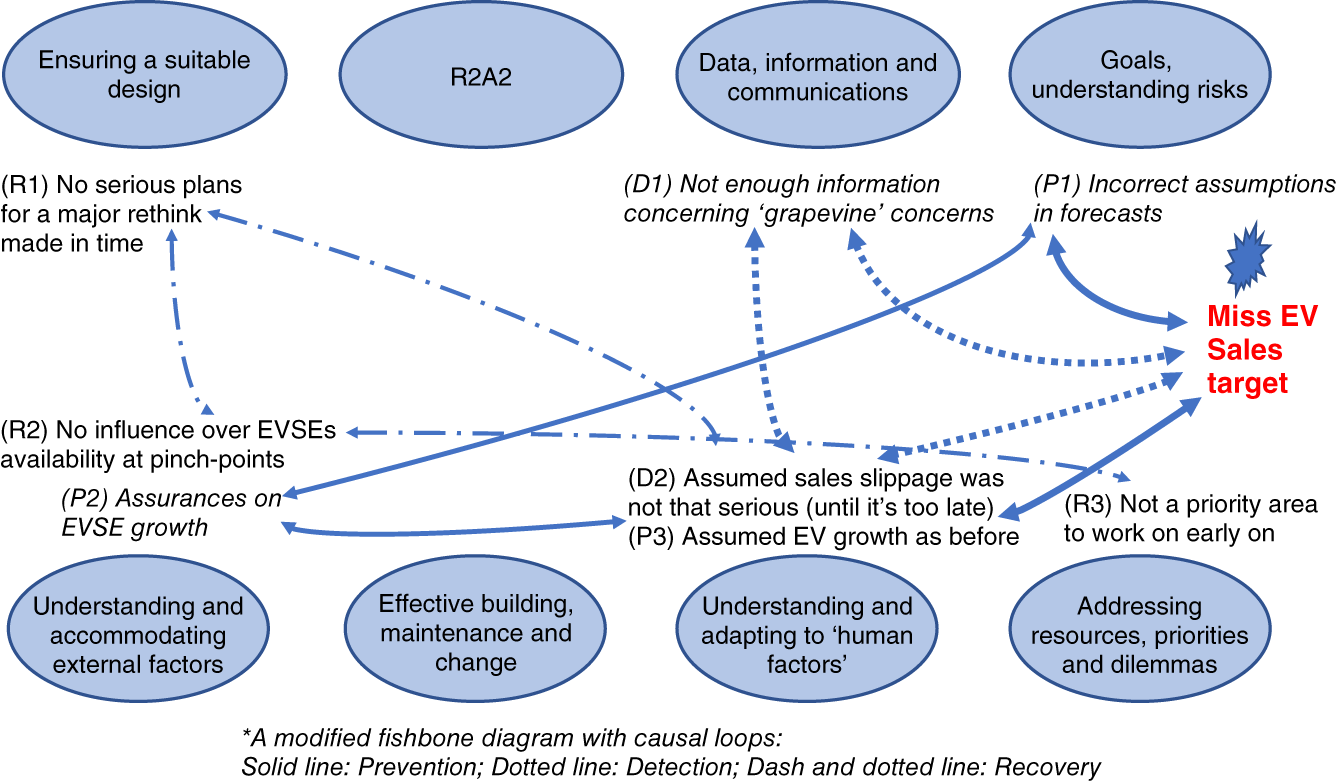
Diagram 3.5 Eight ways to understand why, with connections (illustration)
It should be no surprise that Tesla has such an extensive network of fast charging EVSEs and that an increasing number of EV producers, (such as Ford and GM), and members of the public, are seeing the connections between an enjoyable EV experience and the availability of fast charging EVSEs.[28]
Thus, unless the two systems of EVs and EVSEs are designed to work better together, with a clear change programme to achieve this, maintain the network of EVSEs and overcome a range of constraints and dilemmas (e.g. charging for EVs without access to charging points at home), problems are almost guaranteed for the future. Already there are early warning signs that problems in this arena could impact the economy as well as our CO₂ reduction goals if ‘the jigsaw is not joined up’.[29]
When to use it
Analyzing why a product launch fell short of sales targets by considering internal mistakes alongside external dependencies like supplier commitments and customer sentiment.
Improving supply chain resilience by identifying interconnected failure modes in prevention (risk mitigation), detection (monitoring), and recovery (backup plans).
Diagnosing recurring operational bottlenecks in a manufacturing process by tracing causal links between different root causes (e.g., machine downtime, worker training, spare parts availability).
Strategic planning for technology adoption (e.g., EVs) by recognizing the co-dependence between the product and complementary infrastructure.
FROM THEORY TO EVERYDAY LIFE
In practice
EV Sales Shortfall Analysis
A company sets a goal to sell electric vehicles but misses the target. Investigation using the eight ways framework reveals: prevention failures (faulty assumptions about EV use as main car, over-optimistic growth projections, unreliable EVSE provider assurances); detection failures (missing early warnings from customer stories about 'nightmare journeys'); and recovery failures (no contingency plan, no joint action with EVSE providers, lack of prioritization). The example shows how these causes are interconnected (e.g., EV sales depend on charging infrastructure).
A MOMENT TO REFLECT
Put it to work.
Think of a recent project or decision that failed. Use the eight ways (prevention, detection, recovery) to identify at least three distinct causes, then look for connections between them. What hidden dependencies emerge?
How might you improve your detection systems to catch early warning signals before a problem escalates?
In your domain, what are the key external systems that your own system depends on? How would you map causal loops between them and your core processes?
CONTINUE THE CONVERSATION
Source texts
- Beyond the Five Whys Root Cause Analysis and Systems Thinking (James C. Paterson)