Enabling Constraints
Enabling constraints set a boundary or requirement while leaving room to discover how to meet it. Nimitz’s wartime order to establish Combat Information Centers specified their purpose while allowing ships to test different arrangements and share what worked.
THE IDEA
Fostering Experimentation
Nimitz was an experienced commander who had a reputation for fostering the initiative of his subordinates. That was not a unique skill for U.S. Navy officers of the era, but Nimitz was particularly effective. He had demonstrated this aptitude regularly before the war as the commanding officer of cruiser U.S.S. Augusta (CA-31) and head of the Navy’s Bureau of Navigation. While Nimitz served at the Bureau of Navigation, President Franklin D. Roosevelt became familiar with his talents. After the attack on Pearl Harbor, Roosevelt chose Nimitz to lead the Pacific Fleet.
Nimitz suspected the problem in the night battles was “orientation,” which John Boyd argued was the “center of gravity for command and control” of military units in combat. Task force commanders and commanding officers failed to make sense of all available information and were unable to use it to their advantage.
To address the problem, Nimitz turned to an approach that the Navy had consistently used in peacetime to successfully foster innovation. Crucially, Nimitz chose this method in the middle of a war when delays might be very costly. The approach used the following steps:
- Frame the problem or challenge
- Establish the constraints
- Encourage parallel experimentation
- Exploit the best-fitting solution that emerges
The challenge had already been identified. Nimitz needed to frame it appropriately and then establish one or more constraints that would encourage a series of parallel experiments. He hypothesized that new structures were needed aboard each ship to process information more effectively. Nimitz was unsure what form these new structures should take or how best to organize them, but he decided not to try to figure that out. Instead, he allowed different solutions to emerge through experimentation.
Nimitz initiated the process of parallel experimentation on November 26, 1942, when he issued a new set of instructions. He ordered each ship of the fleet to create a new shipboard organizational structure. Nimitz framed the problem by stating, “Maximum combat efficiency by individual ships and task organizations can best be attained through full utilization of all available sources of combat intelligence. In this, radar shall be used to the maximum effectiveness.” To do that, each ship would establish “a center, in which information from all available sources can be received, assimilated, and evaluated.” That center was the CIC. The order to establish one was the enabling constraint.
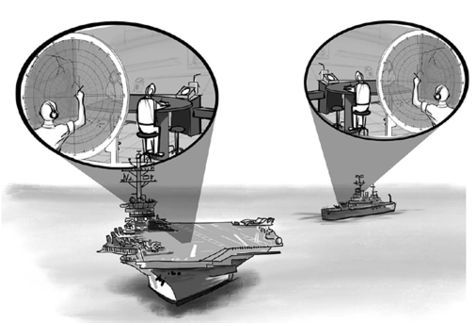
Figure 1. Combat Information Centers (CICs) as an enabling constraint.
Nimitz fostered his subordinates’ creativity by specifying what the CIC was expected to do while providing virtually no details about how to do it. Each CIC would maintain a master plot of all available information, evaluate it, quickly make sense of it, and share the understanding gained with the ship’s captain and its weapons systems. These open-ended instructions left ship and task force commanders free to experiment. The order to establish a CIC was an enabling constraint because it allowed a great deal of contextual sensitivity. Ship captains could organize their CICs however they felt best; feedback rapidly allowed them to see if their experiment was heading in the right direction.
Three distinct feedback loops provided valuable information about the effectiveness of different CIC techniques.
- Combat was arguably the most crucial feedback loop. As the Allied offensive in the Solomon Islands moved past Guadalcanal, the Imperial Japanese Navy continued to fight aggressively. In a series of night battles in and around Kula Gulf in mid-1943, the U.S. Navy learned valuable lessons about the limitations of existing CIC organizations.
- Informal collaborative networks were critical. When ships returned to port, crews shared their experiences and lessons in conferences that had “great value.” They learned from each other and spread the most effective techniques through stories they told about their experiences.
- The Pacific Fleet managed the third feedback loop. Nimitz was committed to identifying the most effective techniques and harnessing them for future exploitation. Regular action reports allowed Nimitz and his staff to review the fleet’s work and identify the most effective solutions. They periodically brought the officers responsible for them back to Pearl Harbor to codify the most effective techniques.
Early experiments, focused by these feedback loops, led to the emergence of contextually sensitive approaches. One of the most important was a variation based on ship type. Aboard destroyers, the smallest and most nimble ships of the fleet, the executive officer generally assumed responsibility for organizing and running the ship’s CIC. Battleships needed a different approach. On battleships, the executive officer already had a specific and well-defined role; he manned the secondary conning station, ready to assume command in case of damage to the primary. A different officer had to be chosen, and because battleships relied on their heavy guns, it was usually someone from within the gunnery department. A more prescriptive “solution” could have prevented captains from adapting the arrangement to their ships.
The fleet urgently needed better ways to manage information, and parallel experiments helped crews learn rapidly. But combat also made failure dangerous. Rapid feedback alone does not make an experiment safe to fail; applying that term requires attention to whether the consequences of failure can be contained.
In the months after Nimitz’s instructions, many ships suffered from problems like those observed off Guadalcanal. Their ability to manage radar information improved, but was still insufficient because of failure to maintain effective plots, inadequate communication procedures, or interference by commanding officers who felt they knew better. However, other ships showed more promise, and their approaches were the ones that Nimitz and his subordinates began to amplify and exploit. Parallel experimentation allowed several possibilities to be explored at once, with more effective approaches selected for wider use. In applying Cynefin’s safe-to-fail approach elsewhere, the boundary must also limit the harm an unsuccessful probe can cause.
The CIC relied on exaptive practice because Nimitz stressed using an existing technique – plotting – in new ways. Plots had been used effectively in the U.S. Navy for decades and were already familiar to ships’ officers and crews, but they tended to operate in isolation. In CICs, multiple plots were integrated, allowing the emergence of vastly increased situational awareness. As a 1943 manual stated, the CIC was not “merely a radar plot… under a new name.” Instead, it was an “agency for the collection, evaluation, and distribution of combat information.”
Plots provided a virtual, top-down view of all contacts’ current and past positions, friendly or enemy. CIC Officers could rapidly integrate the visual information displayed on these plots and make sense of it in real-time. Plots became the “brain” of the most effective CICs. Crews used them to develop a clear “picture” of the situation around them and offer it to the captain and other command functions clearly and directly.
When to use it
A product development team facing uncertainty about user needs can set goals and boundaries (enabling constraints) and allow teams to explore different solutions concurrently.
A military commander can issue mission-type orders specifying the objective but not the tactics, enabling subordinate leaders to adapt to local conditions.
An organization undergoing digital transformation can mandate a new data-driven decision process (enabling constraint) while letting departments design their own implementation approaches.
A research lab can define a broad problem and provide resources, then let teams run parallel experiments to discover the most effective methodologies.
FROM THEORY TO EVERYDAY LIFE
In practice
CIC Organization on Destroyers vs. Battleships
On destroyers, the executive officer ran the CIC; on battleships, a gunnery officer ran it because the executive officer manned the secondary conning station. This contextual adaptation emerged from allowing ship captains to design their own CIC structures.
Feedback Loops from Combat and Conferences
After night battles near Kula Gulf, the Navy identified CIC limitations. Informal conferences in port spread effective techniques. Nimitz's staff reviewed action reports and codified best practices, accelerating learning.
A MOMENT TO REFLECT
Put it to work.
Identify a complex problem in your organization. What enabling constraints could you set to encourage parallel experimentation?
How can you establish feedback loops to rapidly learn from multiple experimental approaches?
Think of a situation where you imposed a detailed solution. How might an enabling constraint have produced better contextual outcomes?
Often confused with
CONTINUE THE CONVERSATION
Source texts
- Cynefin - Weaving Sense-Making into the Fabric of Our World ED02 (Dave Snowden Sonja Blignaut Zhen Goh)