Boundary Diagrams
Boundary diagrams are a visual tool used in root cause analysis and systems thinking to define the scope of an investigation, enabling practitioners to consciously choose which parts of the system to include or exclude to avoid endless causal chains.
THE IDEA
When to Stop and Boundary Diagrams
Given that a systems‑based analysis involves ‘stepping back’, it's fair to ask how to ensure that such an approach doesn't lead to endless causes being uncovered. As Conrad Lorenz famously put it: ‘If the flap of a butterfly's wings can be instrumental in generating a tornado, it can equally well be instrumental in preventing a tornado’.22
The question of when to stop can also be applied to root cause analysis (RCA). As leading Aviation Safety expert Sidney Dekker noted: ‘What you call [the] root cause is simply the place where you stop looking any further’.23
Fortunately, there is a technique that bridges RCA and systems thinking that looks at the question of ‘where to draw a line’. It is called the ‘boundary diagram’ and is used in Failure Mode and Effects Analysis (FMEA). It provides a visual overview of different activities, processes, systems and other factors and can be used to help you make a conscious choice about the boundaries around any RCA investigation, inquiry or systems analysis so that you are clear about what you are and are not looking at.24 The book illustrates such boundaries in its causal loop diagrams for EVs (in Diagram 3.2) and the financial crisis of 2007–2008 (in Diagram 3.3).25
A boundary diagram is helpful because it highlights the choices you have when doing RCA or an inquiry, for example:
- focusing on a specific area (e.g. a department, project or system), or
- looking at a wider set of activities (e.g. an organisational process across several departments), or
- considering the adverse outcome that you want to avoid in the future (e.g. the boundary you would draw around the impacts in a Bowtie diagram),26 or
- looking at a range of other organisations, or other external factors, that may be ‘in the mix’ to fully understand what happened (which may include laws, regulations, regulatory and government bodies, etc.).27
If you carry out an RCA or inquiry with a broad scope, you will get a more holistic picture of what happened, but it may take longer to gather information and evidence and arrive at conclusions. Conversely, the narrower the scope of an inquiry, the easier and quicker it should be to complete, but the greater the risk of missing important causes outside that scope.
Diagram 3.4 provides an illustration of boundary choices for an RCA investigation in an organisation where a problem has arisen in a department (say, in Department 1). It shows some of the specific choices that can be made: (i) focus the investigation on Department 1 or (ii) Departments 1, 2 and 3, which may be involved in a shared process, or (iii) include other functions as well (e.g. the IT department).
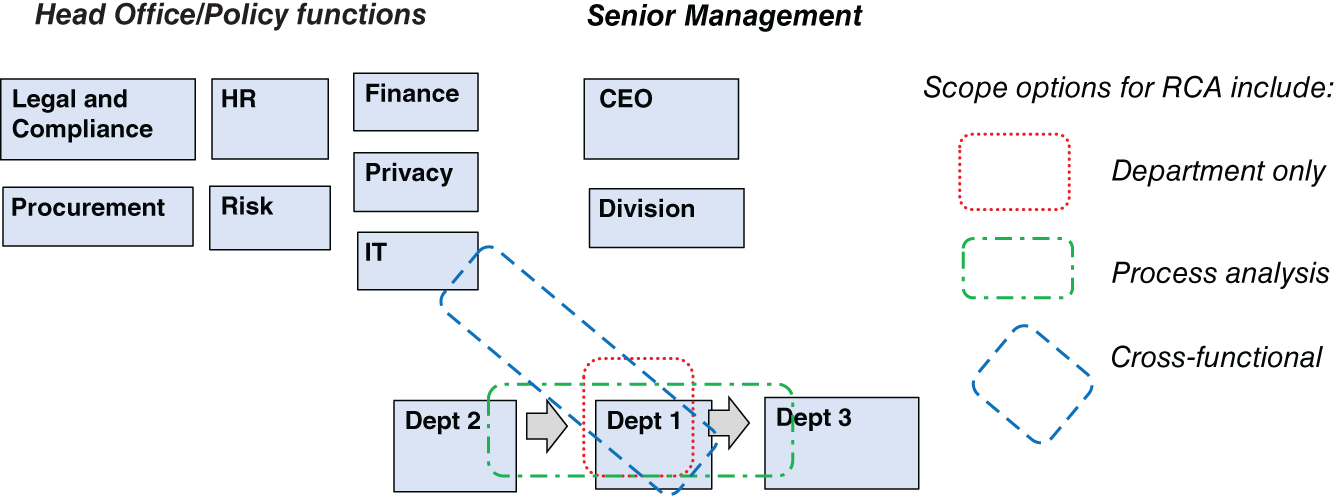
Diagram 3.4 Boundary diagram choices for RCA (illustration)
A boundary diagram makes the scope choices visible; it does not decide them for you. Understanding a significant problem may require involving other parts of the organisation and examining their interactions. Dr Mannie Sher (Principal Researcher and Consultant, Tavistock Institute) explains:
‘We often work with senior executives who engage us to solve a problem or promote a development that is, for example, relevant in one area. The executives normally appreciate that a difficulty (or resistance to the development) in one area may be due to interactions with other areas in the organisation, which suggests that they are prepared to think systemically about what maybe is going on unconsciously. Normally, they would agree that we should work with several related departments that are involved, one way or another, in a problem (or development).
But the challenging bit comes when we ask, “What is the executive team's role in our review?” To which, often, we will hear, “The executive team will be here when you are finished; you can report your results when you have completed your work.” And our response is invariably, “If you want challenges to be resolved over the long run, you will need to think about the executive team's role too, including your internal dynamics as a senior team, and be willing to change too.”
Our message is that when you are looking for long‐term, lasting improvements, you must have a commitment from all relevant parts of the system to participate in an inquiry into their roles into what has gone on and – as needed – to change’.
Stephen Foster (holder of SVP positions in Finance and Audit and Compliance) conveys a similar message about effective RCA:
‘Sometimes you start an inquiry with certain expectations and the dreaded “preconceived ideas”, but if it is done well you can find it's like a boomerang that can come back to hit you. Specifically, you can find the inquiry raises important questions and challenges for the very people who asked for explanations why something went wrong.
All parties need to be aware that this may happen and have a plan for how to manage it if it does. In mature, open environments, it can be managed well, and even constructively, “mea‑culpa” can be a very powerful and rewarding signal.
However, though I have not experienced it, in the worst cases and environments, those sponsoring an inquiry, or RCA investigation, can constrain the boundary of what is looked at, such that important insights stay out of reach, especially if those insights will call into question some of the decisions they have made.’
When to use it
Investigating a manufacturing defect: using a boundary diagram to decide whether to include raw material suppliers, production equipment, or operator training.
Analysing a software system failure: using a boundary diagram to scope the investigation from the development team to infrastructure, third-party services, and organisational processes.
Conducting a post-mortem for a failed project: using a boundary diagram to determine if the scope should include team dynamics, cross-departmental dependencies, and executive decision-making.
Reviewing a safety incident in healthcare: using a boundary diagram to decide whether to focus on the immediate clinical error or include hospital policies, staffing levels, and regulatory oversight.
FROM THEORY TO EVERYDAY LIFE
In practice
Boundary Diagram for a Corporate Investigation
A problem arises in Department 1 of an organisation. The investigator uses a boundary diagram to decide whether to investigate only Department 1, extend to Departments 1, 2, and 3 involved in a shared process, or also include supporting functions like IT and external factors such as regulations. The diagram visually maps these choices, making the trade-offs between scope and thoroughness explicit.
Applying Boundary Diagrams in Healthcare Incident Analysis
After a patient safety incident, a hospital team uses a boundary diagram to decide if they should focus solely on the clinical team (department-level) or include wider factors like hospital administration, equipment suppliers, and regulatory policies. The diagram helps them consciously choose a scope that captures systemic contributions without becoming unmanageable.
A MOMENT TO REFLECT
Put it to work.
Think of a recent problem you investigated. Did you implicitly set a boundary? How would drawing an explicit boundary diagram have changed your approach?
What are the risks of setting the boundary too narrow or too broad in a root cause analysis? How can a boundary diagram help manage these risks?
In your organisation, are there hidden pressures to keep investigations within a narrow scope? How could boundary diagrams be used to advocate for a more systemic inquiry?
CONTINUE THE CONVERSATION
Source texts
- Beyond the Five Whys Root Cause Analysis and Systems Thinking (James C. Paterson)