Timescales for Remediation and Tracking Remediation Progress
A framework for determining the appropriate timescale to remediate issues, balancing speed with robustness. It includes specifying remediation timeframes based on impact and complexity, and tracking progress with SMART milestones.
THE IDEA
Timescales for Remediation and Tracking Remediation Progress
Clearly, if there is an immediate problem of concern, managers and stakeholders will likely agree to deliver a ‘quick fix’ as soon as possible. This may also include ‘containment’ and ‘recovery’ actions to undo any immediate adverse impacts. This is a territory that many organisations will be familiar with.
But once the damage has been repaired and a quick‐fix improvement implemented, key questions to consider afterwards are: (i) how robust are any quick‐fix measures? (ii) How quickly should a longer‐term solution be put in place?
Suppose we need to change a process, improve staff training and automate certain activities in a system. On the one hand, we would like to fix things as quickly as possible. Still, on the other hand, we mustn't fix things in such a rush that we make mistakes in the way any new processes and systems are updated.
A good practice is to create a framework within which the dilemma between (a) the speed to act and (b) the time to ensure actions are robust is considered and addressed.
Some organisations specify remediation timeframes. So, for high‐impact areas, they might specify: ‘These should usually be fixed within (say) 1–3 months if action just relates to simple process changes and (say) 4–6 months if an IT system change is required. And suppose there isn't enough resource to do this in the time specified. In that case, this should be escalated to an operations committee or risk committee to ask them to decide whether an additional resource should be allocated or whether they are going to accept risk for a longer period’. Diagram A.2 illustrates the sort of remediation framework that can be adopted.
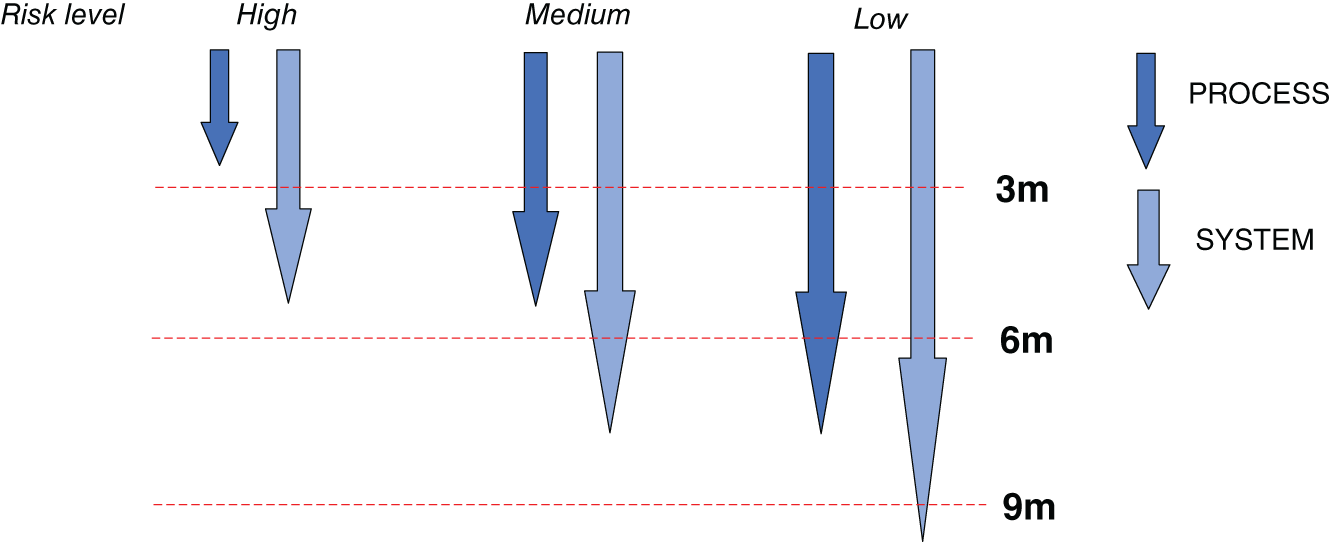
Diagram A.2 Recommended remediation timescales
This framework is helpful because:
- It encourages consistency across different areas about what should be done and by when;
- It seeks to normalise the process for determining whether there will be additional resources (or not);
- It ensures that accountability for any risk exposures sits with budget holders who have the authority to expedite actions or not or gets escalated further if they do not have the authority to act (e.g. when a cross‐functional initiative is needed).
In terms of tracking progress, a good practice is to set SMART targets at intervals.5
Thus, for a new IT system to be in place in, say, 24 weeks, it might require a plan along the following lines:
- 6 weeks: new, approved process, with critical new IT system requirements clarified;
- 8 weeks: commencement of systems upgrade;
- 16 weeks: system built and tested;
- 18 weeks: staff training starts;
- 22 weeks: staff training ends and go‐live decision made;
- 24 weeks: new IT system go live.
In this scenario, any problems with resources or priorities would become transparent within weeks and can be escalated quickly, reducing the chances of last‐minute surprises.
When to use it
Handling a data breach that requires immediate containment and long-term system changes.
Implementing a new software system with phased milestones and regular progress reviews.
Responding to a customer complaint that triggers process improvement and staff training.
Addressing a compliance gap that necessitates both quick fixes and structural changes.
FROM THEORY TO EVERYDAY LIFE
In practice
IT System Upgrade Timeline
For a new IT system to be implemented in 24 weeks, a plan with milestones at 6, 8, 16, 18, 22, and 24 weeks ensures transparent tracking and early escalation of resource or priority issues.
Simple Process Change Remediation
A high-impact process change may be fixed within 1-3 months if it only involves simple changes, while IT system changes may require 4-6 months. If resources are insufficient, escalation to a risk committee ensures accountability.
A MOMENT TO REFLECT
Put it to work.
How would you determine the appropriate timescale for remediating a critical issue in your organization?
What factors would you consider when balancing the speed of a fix with the need for robustness?
How can you ensure that progress toward remediation is tracked effectively and that potential delays are escalated promptly?
CONTINUE THE CONVERSATION
Source texts
- Beyond the Five Whys Root Cause Analysis and Systems Thinking (James C. Paterson)