Theory of Unconscious Thinking
The book proposes taking a break when deliberate analysis stalls. Its coin-toss exercise uses your reaction to an imagined outcome to explore preferences; that reaction is one input to a decision, not proof of which option is best.
THE IDEA
THE THEORY OF UNCONSCIOUS THINKING
HOW TO MAKE DECISIONS INTUITIVELY
The book proposes taking a break when a complex choice resists deliberate comparison. It suggests that intuition can draw on experience and information that is difficult to explain consciously. This passage does not establish that unconscious thinking generally produces better decisions.
The book attributes a simple exercise to psychologist Gerd Gigerenzer: if you cannot decide between two options, toss a coin and notice which result you hope for while it is in the air. Your reaction may reveal a preference. It does not test the facts behind the choice or remove the need to consider consequences.
A pause can give you another way to approach the decision. Compare any intuition that emerges with the evidence and constraints you already know.
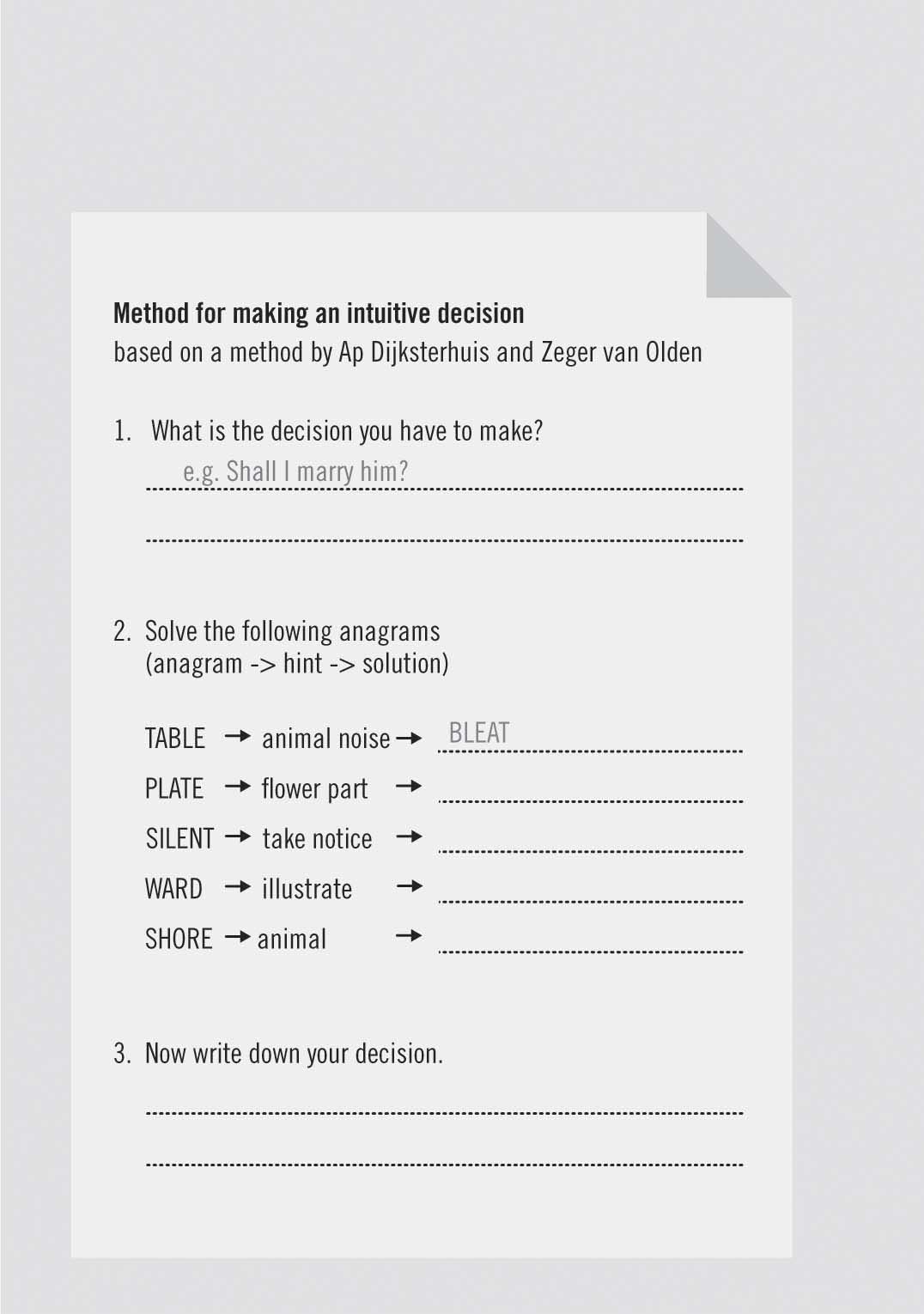
When to use it
Choosing between two job offers with many variables.
Deciding which neighborhood to move to when both options have pros and cons.
Selecting a college major when multiple fields interest you.
Making a personal decision about a relationship when logical analysis is inconclusive.
FROM THEORY TO EVERYDAY LIFE
In practice
Coin Toss Trick
When torn between two job offers, assign an offer to each side of a coin and toss it. Notice whether you hope for one result. That reaction may help you articulate a preference to examine alongside pay, working conditions, and other considerations.
A MOMENT TO REFLECT
Put it to work.
Think of a recent complex decision you struggled with. Did you eventually trust your intuition, and how did that turn out?
Can you recall a time when overanalyzing led to a poor decision? What might have changed if you had used intuition?
What factors might prevent you from relying on your unconscious mind in high-stakes situations?
CONTINUE THE CONVERSATION
Source texts
- The Decision Book Fifty Models for Strategic Thinking