The Result Optimization Model
The result optimization model divides project time into three equal loops. Each loop produces a complete version, allowing the next to revise and improve it before the final deadline.
THE IDEA
THE RESULT OPTIMIZATION MODEL
WHY THE PRINTER ALWAYS BREAKS DOWN JUST BEFORE A DEADLINE
There are many project management models and methods. Most of them are based on the premise that there is a fixed amount of time in which to carry out a project. Generally, within this time, ideas are gathered (G) and consolidated (C), and a concept is selected and implemented (I). In real life, we all know that we never have enough time. And the little time we do have is reduced by unforeseen events like a printer breaking down just when you want to use it.
The result optimization model divides the available time into three sequences (loops) of equal length, thereby forcing the project manager to complete the project three times. The idea is to improve the outcome in each successive working loop. This method leads not only to improved output quality but also to a more successful final outcome: at the end of a project, instead of simply being glad that it is “finally put to bed,” the whole team’s sense of achievement is intensified threefold.
Beware! Be stringent when carrying out this strategy: work in such a way that each loop is properly completed before embarking on the next. Otherwise this model loses its dynamic.
With development processes, it is important to clearly separate the three stages, those of gathering, consolidation and implementation.
A beautiful thing is never perfect. Anonymous
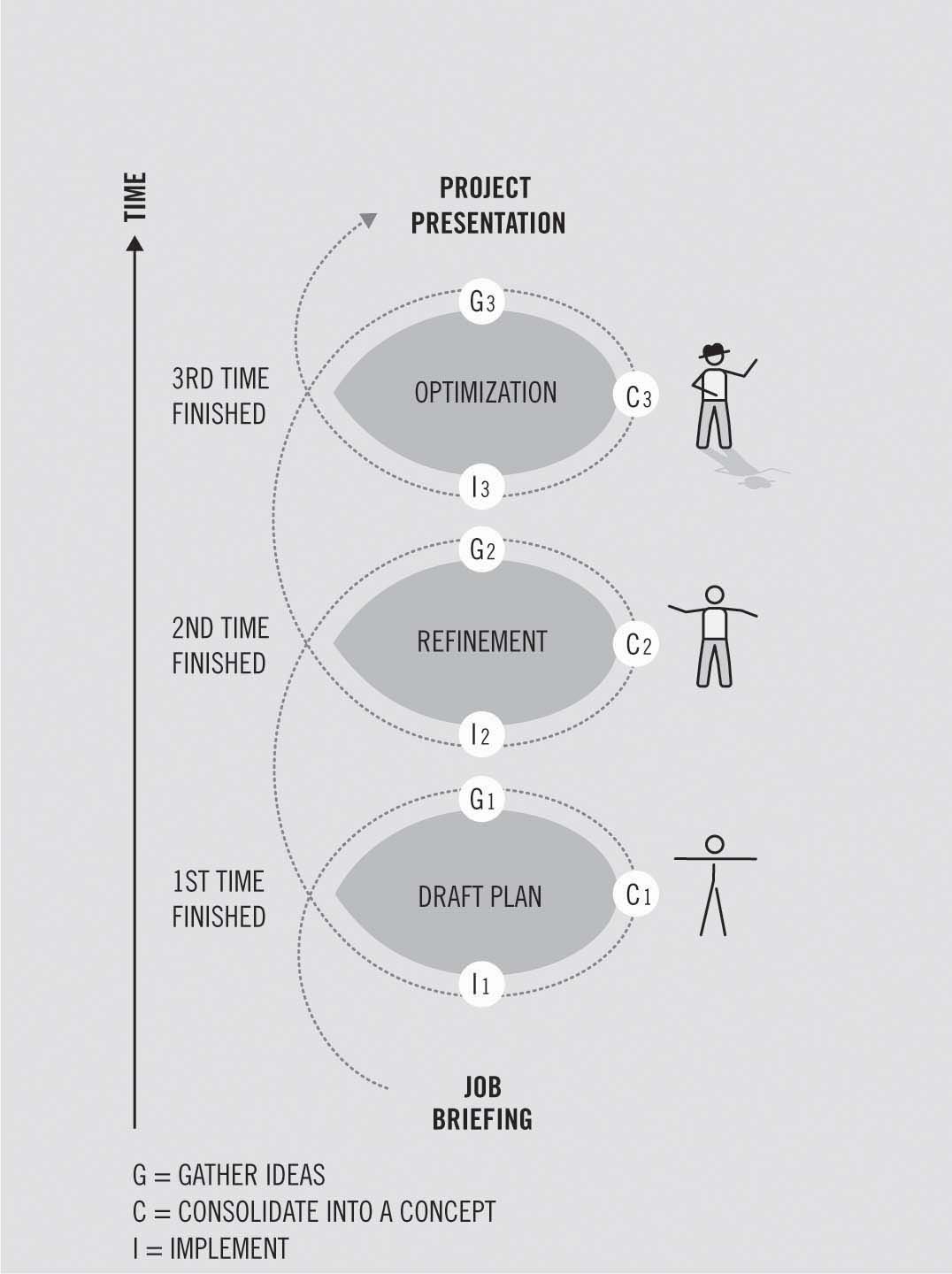
To achieve an optimal result, you should plan your project so that it is “finished” three times. After the third time it really is finished.
When to use it
Planning a marketing campaign with iterative refinement of messaging and channels.
Developing a presentation: finish a rough presentation in the first loop, a revised presentation in the second, and a rehearsed final version in the third.
Writing a book: first draft captures ideas, second draft restructures chapters, third draft polishes prose.
FROM THEORY TO EVERYDAY LIFE
In practice
Writing a Report
For a report, reserve three cycles of equal length. Produce a complete rough report in the first, revise the whole argument and structure in the second, and complete a checked, formatted version in the third. Each cycle includes gathering, consolidation, and implementation.
Software Feature Development
For a software feature, use the first loop to deliver a small working version, the second to revise it after testing, and the third to complete another tested version. Keep the scope small enough that each loop finishes something usable.
A MOMENT TO REFLECT
Put it to work.
How can you apply the three-loop approach to your current project to achieve a better outcome?
What unforeseen events could disrupt your loops, and how can you mitigate them?
What might be the consequences of skipping a loop or not completing it properly?
CONTINUE THE CONVERSATION
Source texts
- The Decision Book Fifty Models for Strategic Thinking