The Maslow Pyramid
Maslow’s hierarchy groups needs from physiological needs to self-actualization. The Decision Book uses it to compare what you have with what you want and to question whether your priorities reflect unmet needs.
THE IDEA
THE MASLOW PYRAMIDS
WHAT YOU ACTUALLY NEED, WHAT YOU ACTUALLY WANT
“The three most important questions,” begins the 2003 German film Hierankl, “are: Are you having sex? Do you have a family? Are you intellectually stimulated? Scoring three yeses is paradise; two yeses is what you need to be happy, and one yes is what you need to survive.” The film is bad, but the questions it asks are good.
In 1943, the psychologist Abraham Maslow published a “hierarchy of needs” model. He categorized human needs as follows:
• physiological needs (eating, sleeping, warmth, sex)
• security (somewhere to live, job security, health, protection against adversities)
• social relationships (friends, partner, love)
• recognition (status, power, money)
• self-actualization (individuality, realizing personal potential, but also faith and transcendence)
In this presentation, the first three categories are treated as basic needs and the last two as aspirations or growth needs. Comparing them can help distinguish a current lack from a further ambition; it need not imply that everyone follows a fixed sequence or stops thinking about a need once it is met.
The authors offer a provocative rule of thumb for the Western world: the things we desire the most may be the things we need the least.
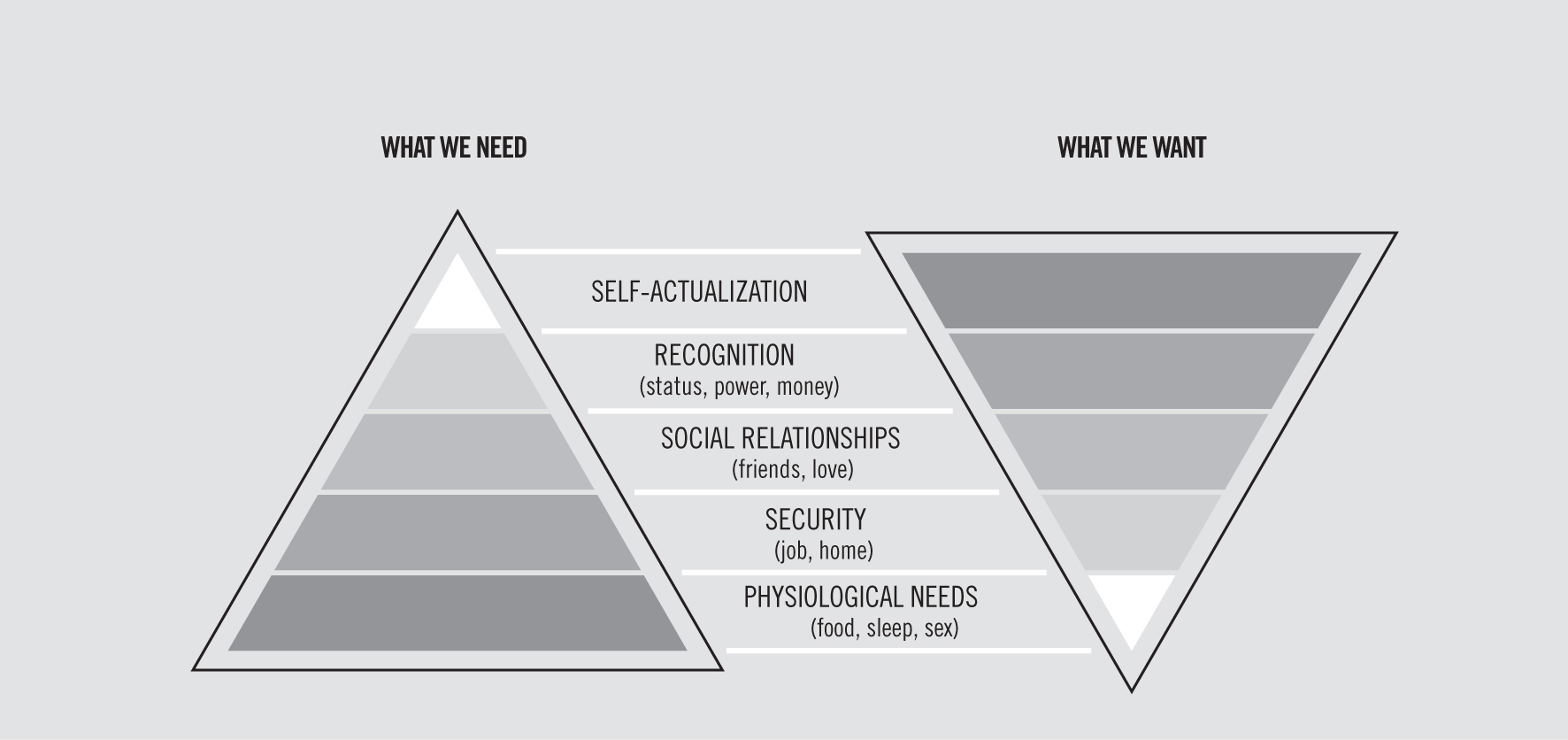
Create your own personal basic needs pyramids. What do you have? What do you want?
When to use it
Reviewing personal goals by identifying unmet needs and considering how they interact with longer-term aspirations.
Team motivation: in a workplace, ensure basic needs (salary, safety) are met before focusing on recognition and self-actualization programs.
Consumer behavior analysis: luxury goods often target recognition and self-actualization, not basic needs.
Understanding societal trends: why people in wealthy countries still feel dissatisfied despite material comfort.
FROM THEORY TO EVERYDAY LIFE
In practice
Film Questions
The German film Hierankl asks three questions about sex, family, and intellectual stimulation, which roughly correspond to Maslow's levels: sex (physiological), family (social relationships), and intellectual stimulation (self-actualization).
Personal Pyramid Exercise
Create your own pyramid by listing what you have (e.g., home, job, friends) and what you want (e.g., recognition, creative work). Notice how desires often focus on the top levels while basic needs are already met.
A MOMENT TO REFLECT
Put it to work.
Which of your current desires are really needs versus aspirations? How would your priorities change if you lost a basic need like security?
Think about a time you achieved a recognition goal. Did it bring lasting satisfaction, or did you quickly move on to the next aspiration?
How might the Maslow Pyramid apply to your work or career decisions? Are you spending too much time on the top levels while neglecting basics?
References
- A Theory of Human Motivation — Abraham Maslow (1943)
CONTINUE THE CONVERSATION
Source texts
- The Decision Book Fifty Models for Strategic Thinking