The 3E Framework and Environmental Forces
The 3E framework brings together empirical and experiential evidence. This article maps operational data, empirical research, norms and standards, and expert judgment to questions about markets, society, politics and law, and technology. The mapping is a starting point for gathering evidence, not a fixed ranking of which source is best.
THE IDEA
The 3E Framework and Environmental Forces
Organizations make choices under uncertainty about markets, competition, society, politics, law, and technology. To keep the inquiry manageable, identify which aspects of those forces matter to the decision. Then use the 3E framework to consider which evidence could answer the relevant questions.
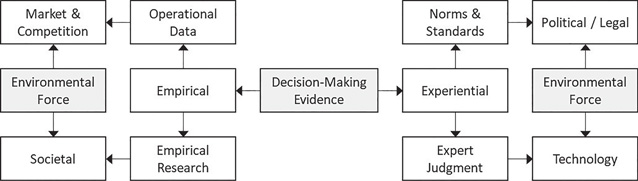
FIGURE 11.1 The 3E Framework and Environmental Forces.
Figure 11.1 maps two broad evidence categories—empirical and experiential—and four constituent types: operational data, empirical research, norms & standards, and expert judgment. The proposed mapping in Figure 11.1 suggests where to begin looking for information. In the 3E framework’s mapping, operational data are the starting point for market and competition questions. Their value depends on their relevance, quality, and timeliness, rather than their category alone. As summarized in Figure 11.1, the author proposes empirical research for societal questions, norms & standards for political and legal questions, and expert judgment for technology questions. Other sources may be equally important in a particular case. Use the mapping to identify gaps and comparisons, then assess the evidence itself.
When to use it
Assessing market entry strategies for a new product launch by systematically collecting operational data from pilot tests, empirical research on customer preferences, regulatory norms, and expert opinions on technology trends.
Improving organizational crisis response by using the framework to identify key sources of information: operational data on immediate impacts, empirical research on past crises, norms/standards for legal compliance, and expert judgment on mitigation tactics.
Designing a public health campaign where societal understanding (empirical research) is primary, but supplemented with operational data (local health metrics), norms (government health guidelines), and expert judgment (epidemiologist insights) to reduce uncertainty about effectiveness.
Prioritizing R&D investments in a tech company by using the framework: technology insights from expert judgment as primary, market signals from operational data, societal acceptance from empirical research, and patent/regulatory norms for legal feasibility.
FROM THEORY TO EVERYDAY LIFE
In practice
Applying the 3E Framework to a Retail Company's Market Expansion
A retailer considering a new region could use the 3E framework to organize its questions: operational records for demand, research for local preferences, applicable rules for constraints, and technical expertise for infrastructure. It would then compare the sources and identify what remains uncertain.
Using the 3E Framework for a Nonprofit's Policy Advocacy
A nonprofit planning advocacy could compare engagement records, research on public opinion, relevant rules, and engineers’ assessments of proposed technologies. The categories help organize the inquiry; they do not determine which strategy will work.
A MOMENT TO REFLECT
Put it to work.
Think of a recent significant decision you made at work or in your organization. Which environmental forces (market, societal, political, technological) were most uncertain? How could the 3E framework have helped you systematically gather information to reduce that uncertainty?
Consider the four constituent categories of the 3E framework (operational data, empirical research, norms & standards, expert judgment). For a current challenge you face, which category would be your primary source of insight? Why?
How might relying too heavily on one type of evidence (e.g., expert judgment) lead to blind spots in decision-making? How does the 3E framework help balance these sources?
CONTINUE THE CONVERSATION
Source texts
- Evidence-Based Decision-Making How to Leverage Available Data and Avoid Cognitive Biases (Andrew D. Banasiewicz)