Tendency to Minimize Energy Output
Conserving energy can leave organisms with resources for later demands. In everyday decisions, reducing effort is useful when it improves a process, but shortcuts may also undermine the result.
THE IDEA
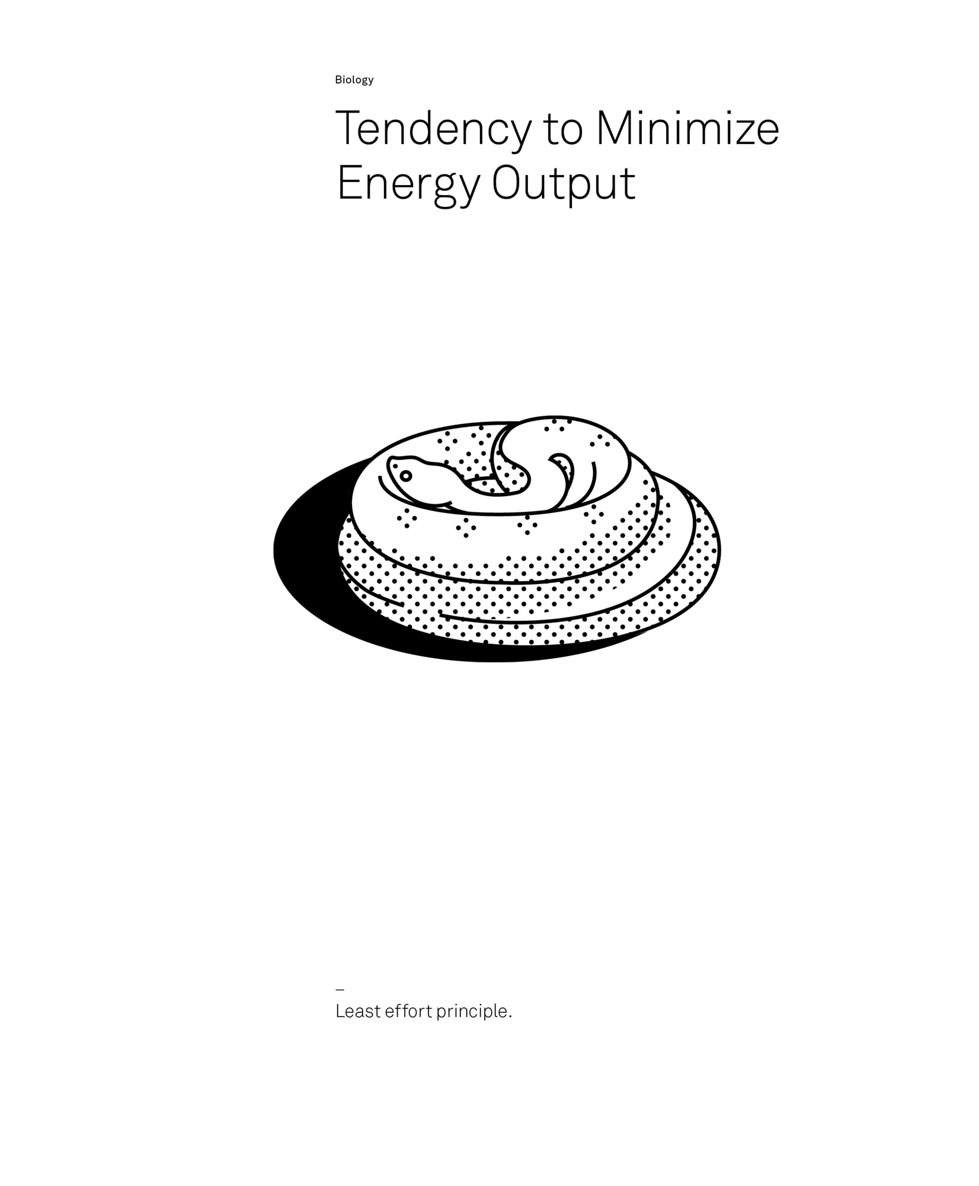
Tendency to Minimize Energy Output
All living beings require energy to perform their daily functions, including sleeping. Over time, species have developed different mechanisms to increase their energy efficiency. The tendency in organisms to conserve their energy can help leave resources available for times of increased need. For humans, we have to be careful though, to make sure minimizing our energy output increases our effectiveness and doesn’t lead to laziness.
When to use it
Personal fitness: considering effort and rest when planning an exercise routine.
Business management: Managers can structure workflows to align with employees' natural inclination to save effort, such as streamlining processes, while implementing checks to avoid shortcuts that compromise quality.
Habit formation: examining whether an existing routine makes a new action easier to start.
FROM THEORY TO EVERYDAY LIFE
In practice
Choosing Convenience Over Health
A person might drive to a nearby store instead of walking, conserving physical energy but sacrificing the health benefits of walking and potentially reinforcing a sedentary lifestyle.
Workplace Automation
An employee automates repetitive data entry tasks to reduce mental energy expenditure. When done thoughtfully, this increases productivity and reduces errors; but if the automation leads to oversight or lack of verification, it can result in costly mistakes.
A MOMENT TO REFLECT
Put it to work.
In what areas of your life might you be minimizing energy output to the point of laziness, and how could you recalibrate?
How could you strategically conserve energy in your daily routine to improve long-term effectiveness without sacrificing quality?
When have you observed this tendency in others, and what were the consequences for their goals or well-being?
CONTINUE THE CONVERSATION
Source texts
- The Great Mental Models Volume 2 Physics, Chemistry and Biology