Sponsored Propaganda
State-sponsored content can borrow the credibility of a familiar news outlet when its origin is hard to recognize. Caulfield and Wineburg describe how placement, branding, and inconspicuous disclosures can obscure who produced a story.
THE IDEA
Sponsored Propaganda
It’s not just the Shells, the ExxonMobils, and the AT&Ts who’ve gotten in on the game. With China and Russia leading the pack, foreign governments spend millions of dollars to place their “news” stories in leading digital publications like the Washington Post, the Wall Street Journal, and the Chicago Tribune. In the twelve months from November 2019 to October 2020, the China Daily Distribution Corporation funneled over nine million dollars to influence American audiences. A favored venue was MSN, Microsoft’s web portal, which featured a positively bubbly story about how Tibet, ravaged by China in a brutal 1950 takeover, had “broken free from the fetters of invading imperialism and embarked on a bright road of unity, progress and development” (see screenshot from MSN). Nowhere does it say the story was paid. You only know that if you recognize “Xinhua” as China’s state-run news agency.24
In another story, MSN repackaged a Xinhua story critical of Taiwan originally published in the Philippines’ Manila Times. When the story resurfaced on MSN’s website, even the Xinhua logo vanished, replaced by the words “Global Times.” Did you recognize the innocuous sounding “Global Times” as the English-language newspaper of China’s Communist Party?25 Neither did we.
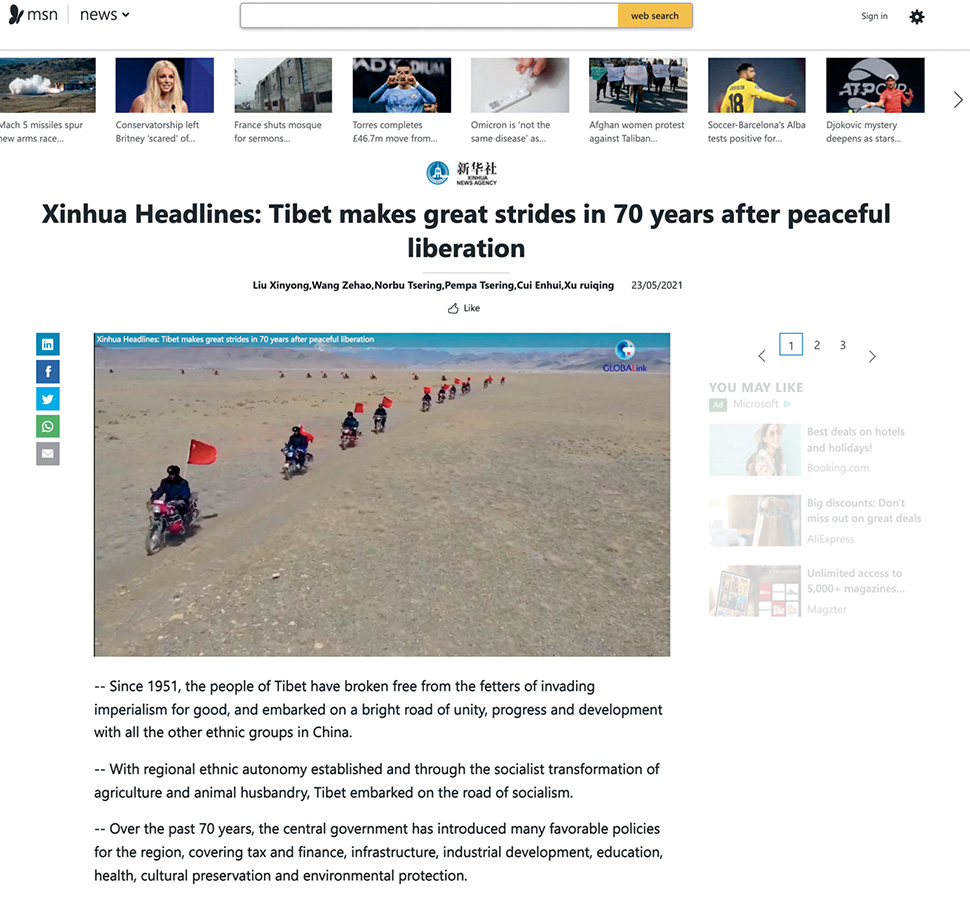
Figure 9.8 Chinese government story appearing on msn.com in May 2021 (link no longer available)
Like other “successful” native ads, these political puff pieces lull unsuspecting readers into consuming state-sponsored propaganda. Researchers from New York University and Hong Kong Baptist University showed people a web page from The Telegraph, a London newspaper founded in 1855. In big letters at the top of the screen was the word “News” followed by “World news” in red. Underneath were glowing stories about China, each with an accompanying photo or illustration. In cramped small print—the smallest print on the screen—came this warning: “This content is produced and published by China Daily, People’s Republic of China, which takes sole responsibility for its contents.” When asked afterward about the content they viewed, 86 percent of viewers were unable to identify its origin.26
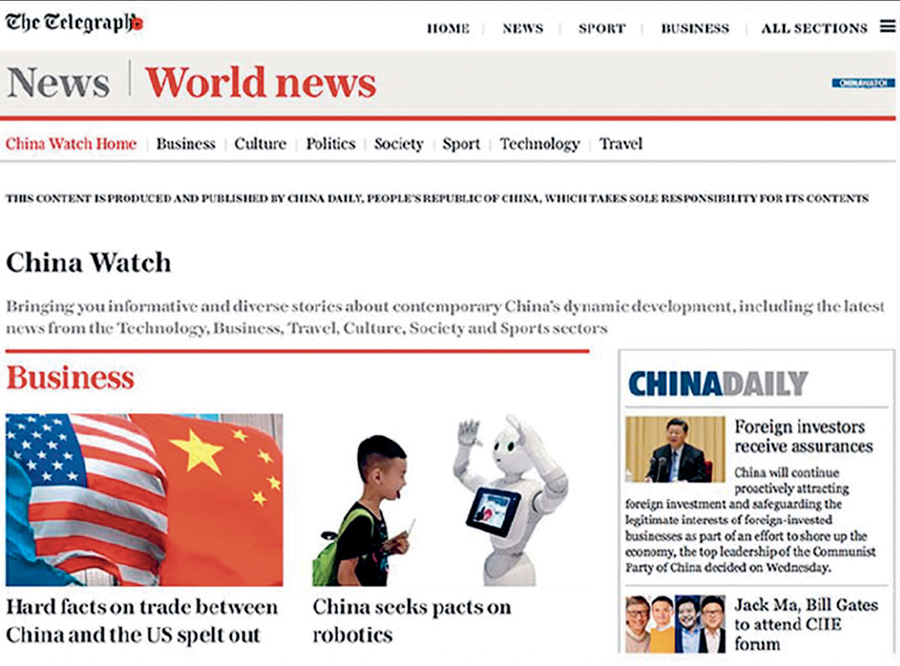
Figure 9.9 Chinese government content appearing on The Telegraph’s website (Dai and Luqiu, “Camouflaged Propaganda”)
When to use it
Evaluating news sources on social media or news aggregators for signs of undisclosed sponsorship.
Teaching media literacy to students to recognize native advertising and state-sponsored propaganda.
Analyzing political content for funding sources before forming opinions.
Designing better disclosure labels to make paid content more obvious to readers.
FROM THEORY TO EVERYDAY LIFE
In practice
China Daily on MSN
The source reports that China Daily Distribution Corporation spent over $9 million to influence American audiences from November 2019 to October 2020. It also describes MSN carrying a favorable story about China’s takeover of Tibet without an obvious paid-content disclosure; the overall spending figure is not an MSN-only total.
The Telegraph Experiment
NYU and Hong Kong Baptist University researchers showed participants a page from The Telegraph with Chinese government stories. Despite a small disclaimer, 86% of viewers could not identify the content's origin.
A MOMENT TO REFLECT
Put it to work.
When reading an online news article, how can you check whether it might be sponsored content from a foreign government?
Why do you think readers fail to notice small disclaimers like 'This content is produced by China Daily'?
How might sponsored propaganda affect your perception of international events if you are not aware of its presence?
CONTINUE THE CONVERSATION
Source texts
- Verified How to Think Straight, Get Duped Less, and Make Better Decisions about What to Believe Online (Mike Caulfield, Sam Wineburg)