Real History, Fake History: How to Tell the Difference
Two social-media claims about historical atrocities illustrate why absence from a textbook does not establish whether an event happened. Each claim needs evidence from sources that can support its specific details.
THE IDEA
In an unregulated internet, scholarly sources compete with blogs, tweets, TikTok videos, memes, and just about everything else, each claiming to possess the truth. Consider the following two items appearing in your social media feed. The first claims that the Union army, not the Confederates, committed the most horrific act of genocide during the Civil War, herding twenty thousand free Black people into a “concentration camp” and starving them to death in an area of Natchez, Mississippi, known as the “Devil’s Punchbowl.” The second claims that on the morning of January 28, 1918, in Porvenir, Texas, a small town about one hundred miles southeast of El Paso, a group of Texas Rangers “went door-to-door, ordering the inhabitants of the community out of their homes,” and massacred a group of fifteen unarmed men.
Neither event was covered in your history book, a fact that doesn’t actually mean that much. Many injustices committed against BIPOC (Black, Indigenous, People of Color) communities have been covered up or simply ignored in official textbook accounts of history. The race massacre in 1921 in the Greenwood area of Tulsa, Oklahoma, occurred when the neighborhood was firebombed from the air, turning thousands of Black families into race refugees. Until just a few years ago, US history textbooks were mute on this horrific crime. So, just because you haven’t heard of the Devil’s Punchbowl or the massacre in Porvenir doesn’t mean they didn’t happen. How, though, would you check?
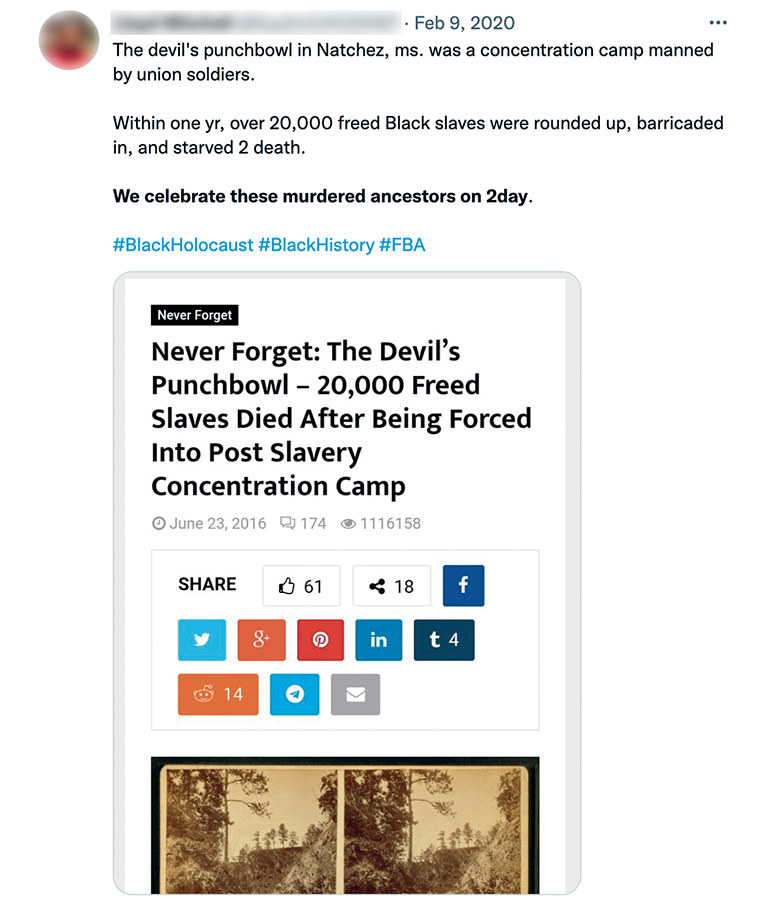
Figure 6.3 Tweet about a “concentration camp” in Natchez, Mississippi. (Poster’s name and handle are redacted.)
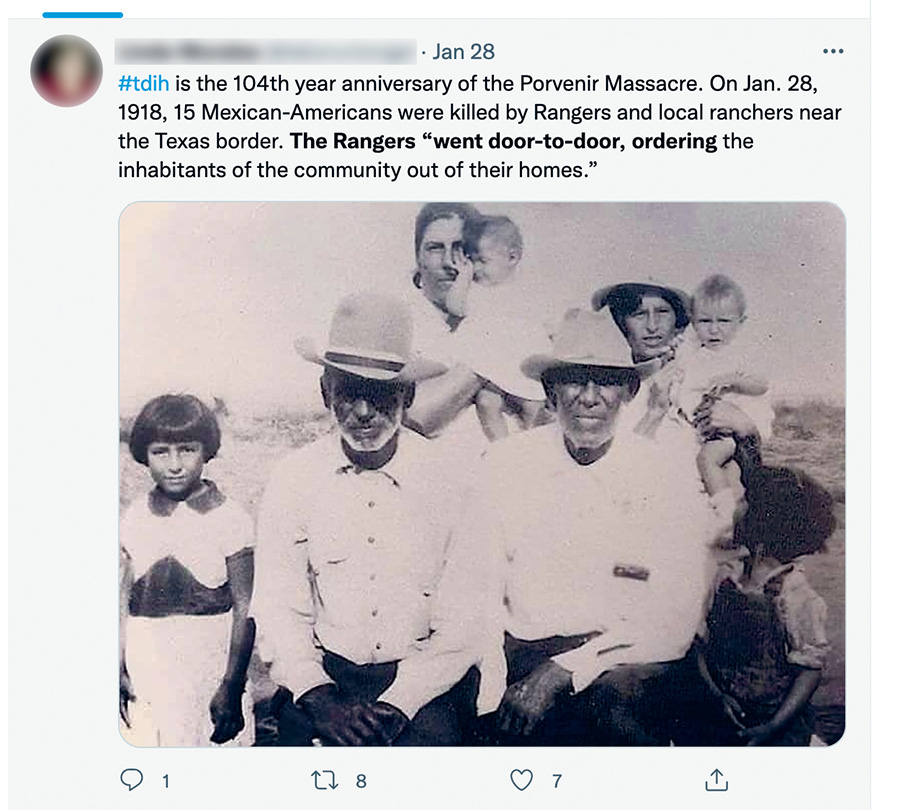
Figure 6.4 Tweet about Texas’s Porvenir Massacre. (Poster’s name and handle are redacted.)
When to use it
Evaluating the credibility of viral social media posts about historical events.
Teaching students how to critically assess online sources of historical information.
Developing personal strategies for fact-checking before sharing historical claims.
Analyzing the role of institutional memory (textbooks) versus alternative narratives.
FROM THEORY TO EVERYDAY LIFE
In practice
Devil's Punchbowl Claim
A social media post asserts that the Union army herded 20,000 free Black people into a concentration camp in Natchez, Mississippi, and starved them to death. This claim is not found in standard textbooks, but that alone does not disprove it.
Porvenir Massacre Claim
A tweet describes Texas Rangers massacring fifteen unarmed men in Porvenir, Texas, in 1918. Evaluating that account requires evidence about this event. Other atrocities being omitted from textbooks explains why textbook silence is inconclusive, but does not corroborate the specific claim.
A MOMENT TO REFLECT
Put it to work.
How would you systematically verify the truth of a historical claim you see on social media?
Why is it problematic to assume that absence from textbooks means an event never happened?
What evidence would help you distinguish a well-documented historical event from a claim repeated mainly through social-media posts?
CONTINUE THE CONVERSATION
Source texts
- Verified How to Think Straight, Get Duped Less, and Make Better Decisions about What to Believe Online (Mike Caulfield, Sam Wineburg)