Population Dynamics Model (System Dynamics)
A system dynamics model representing population as a stock with births as inflow and deaths as outflow, parameterized with fertility and mortality rates.
THE IDEA
Population—for Figures 21–26
Stock: population(t) = population(t – dt) + (births – deaths) × dt
Initial stock value: population = 6.6 billion people
t = years
dt = 1 year
Run time = 100 years
Inflow: births = population × fertility
Outflow: deaths = population × mortality
Converters:
mortality = .009 … or 9 deaths per 1000 population
fertility = .021 … or 21 births per 1000 population
mortality = .030
fertility = .021
mortality = .009
fertility starts at .021 and falls over time to .009 as shown in graph
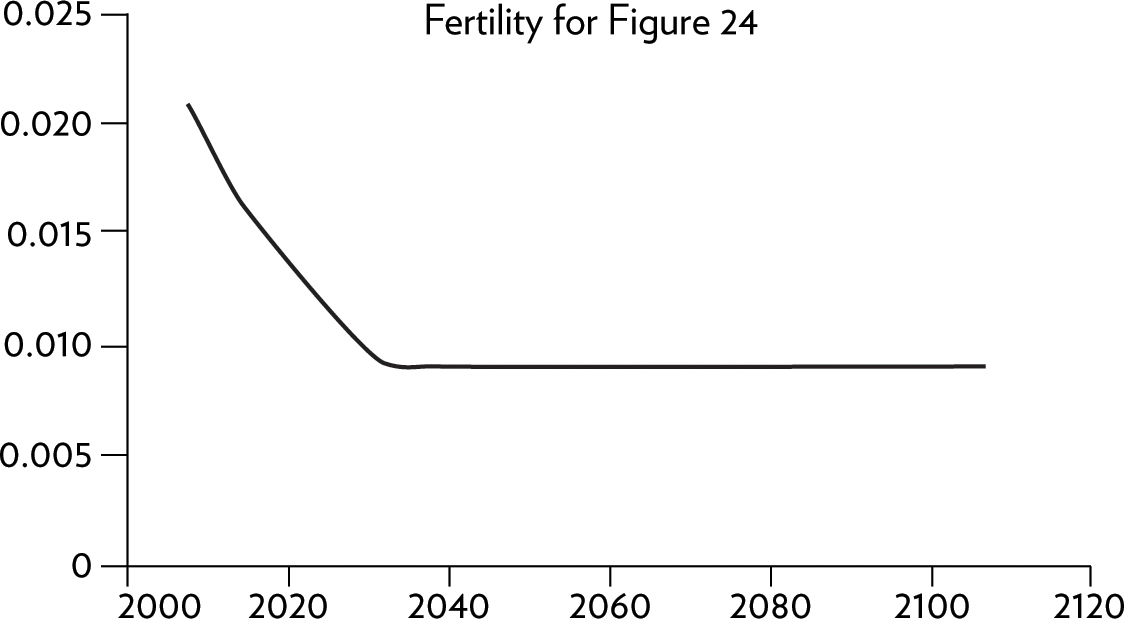
mortality = .009
fertility starts at .021, drops to .009, but then rises to .030 as shown in graph
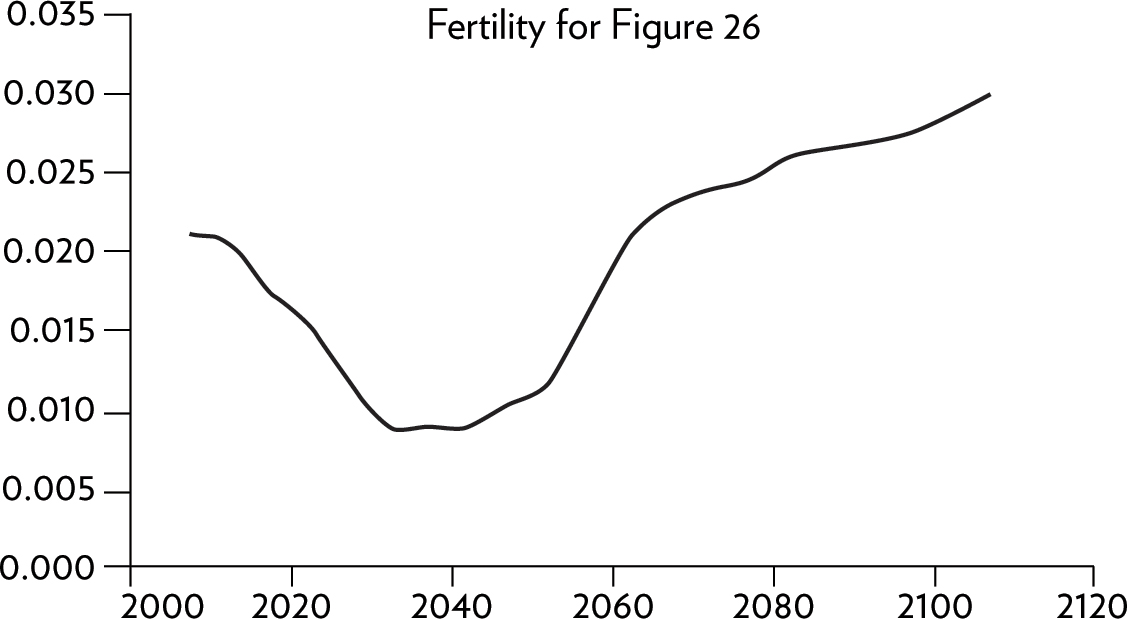
When to use it
Exploring simplified population trajectories under different birth and death rates.
Understanding the impact of public health improvements on population growth.
Simulating the effects of family planning policies on population stabilization.
FROM THEORY TO EVERYDAY LIFE
In practice
Steady Growth Scenario (Figure 22)
With mortality at 0.009 and fertility at 0.021, the population grows exponentially because births exceed deaths.
Declining Population Scenario (Figure 23)
With mortality at 0.030 and fertility at 0.021, deaths exceed births, causing the population to decline over time.
Transition to Zero Growth (Figure 24)
Fertility starts at 0.021 and gradually falls to 0.009 while mortality remains at 0.009, leading to a stabilization of population.
Renewed Growth (Figure 26)
Fertility starts at 0.021, drops to 0.009, then rises to 0.030 while mortality stays at 0.009. Growth slows as the rates converge, then resumes when births again exceed deaths.
A MOMENT TO REFLECT
Put it to work.
How would changing the initial population value affect the long-term dynamics?
What real-world policies could influence the fertility or mortality rates in this model?
What assumptions does this model make about population growth that might not hold in reality?
CONTINUE THE CONVERSATION
Source texts
- Thinking in Systems A Primer