Peer Review
In peer review, specialists assess a submitted paper’s methods, evidence and conclusions before publication. Reviewers may recommend rejection, acceptance or revision; the process offers scrutiny, but publication is not a guarantee that a study is correct.
THE IDEA
What’s Peer Review?
If you’ve ever attended an intro session at your school’s library, you’ve listened to the librarians lower their voices and speak in reverential tones about peer review: the touchstone that separates rigorous research from mere opinion, hearsay, and the untutored opinions of your know-it-all roommate. At its most basic level, peer review is a form of quality control, a process that scholars came up with in the 1700s to protect the public from shady information. It gets its name from the fact that before a study is published, it’s evaluated by experts in the field—“peers”—who decide whether the work passes muster.
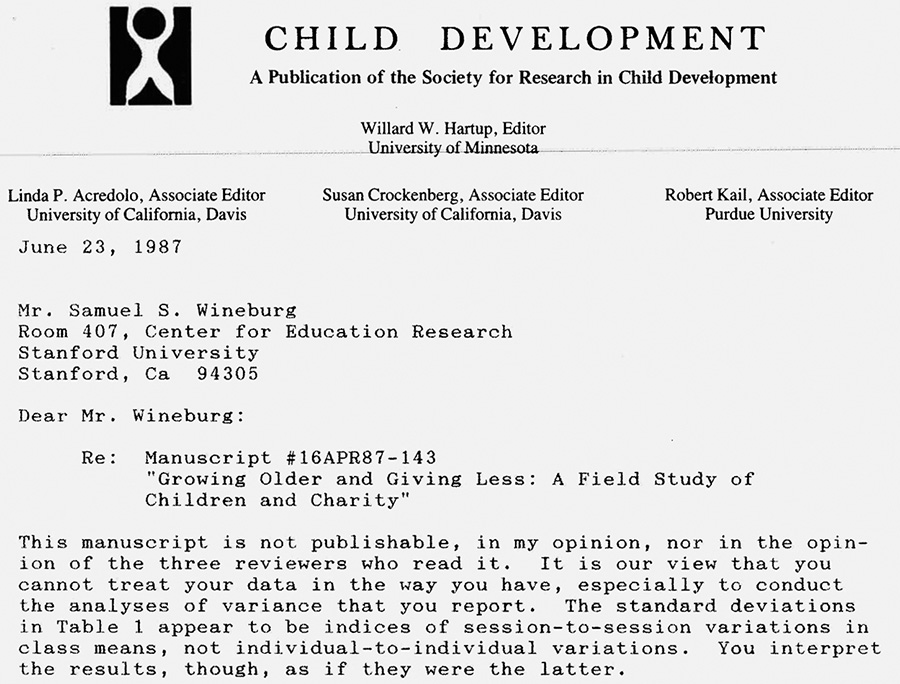
Here’s how the process is supposed to work, at least in theory. A researcher designs a study, gathers data, writes up results, and sends it off to a journal. The editor scans the study to make sure it fits the publication’s scope and then forwards it to reviewers. The reviewers assess the article’s merits: Have the authors interpreted their data correctly? Do the claims fit the evidence? Were the procedures used the correct ones? Are the conclusions justified? If the reviewers deem that the paper is flawed beyond repair, it receives a flat-out rejection. When Sam was starting out, he had the dubious honor of being rejected by some of psychology’s most prestigious journals.
If, on the other hand, a paper shines so brilliantly that there’s not a single thing to fix, it merits a straight acceptance (Sam’s still waiting). What tends to happen a lot of the time is that an article is placed in a nebulous category, known as “revise and resubmit,” that wavers between “reject” and “accept.” In this all-encompassing catch basin, the editor summarizes the reviewers’ criticisms and offers the authors a chance to fix their paper and give it another go. However, the opportunity to resubmit carries no guarantee that the resubmission will be published. If the revised manuscript is sent to new reviewers—something that can and does happen—the manuscript can languish in revise-and-resubmit-land for ages.
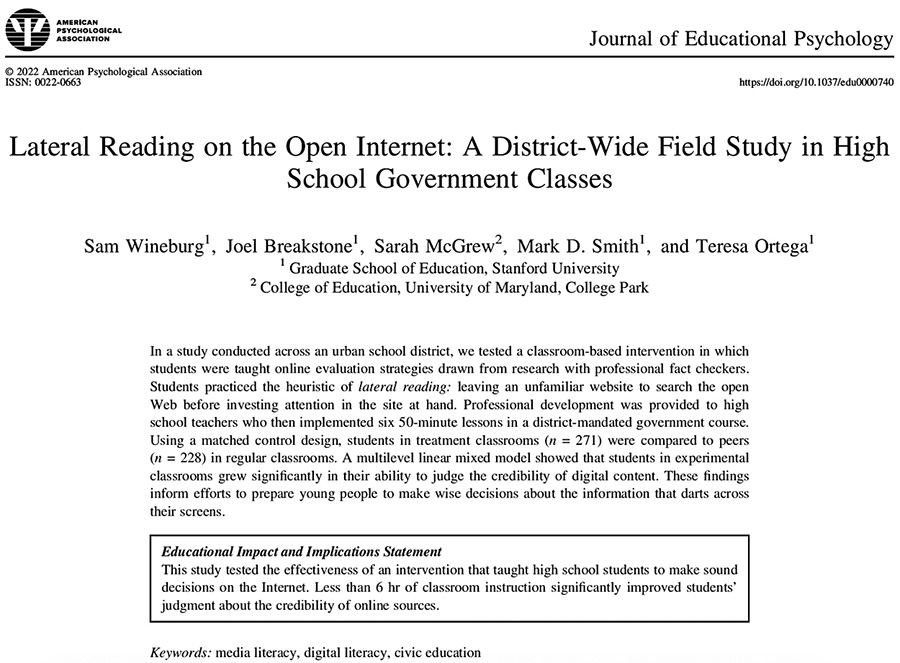
Even if a study is competent and avoids fatal errors, it can still be rejected if the reviewers conclude that it says nothing new or rehashes points already in the scholarly literature. Conversely, reviewers will sometimes accept a paper that’s not ready for prime time if they think it might spur researchers to take up new questions and open new lines of inquiry. If you think the process of peer review sounds complicated, laborious, time-consuming, and pulling-your-hair-out frustrating for anxious authors, you’re right. Case in point: a 2022 study that Sam’s team did on teaching students the techniques in this book took a year and a half and three different revisions before it finally appeared in print2 — Figure unavailable in the source files.
When to use it
Evaluating the credibility of a scientific study for a school project or personal decision.
Understanding the timeline and pressures involved when submitting research for publication.
Assessing a news article that claims a study was 'peer-reviewed' to gauge its reliability.
Deciding whether to accept a revise-and-resubmit offer versus moving to another journal.
FROM THEORY TO EVERYDAY LIFE
In practice
Sam's Rejection from Child Development
Sam describes receiving a rejection letter from Child Development early in his career. The letter makes the journal’s review process concrete, but its presence alone does not establish the quality of the rejected study.
A 2022 Study on Teaching Lateral Reading
Sam's team conducted a study on teaching students lateral reading techniques. The paper took a year and a half and three revisions before being published, demonstrating the lengthy and iterative nature of peer review.
A MOMENT TO REFLECT
Put it to work.
How does the peer review process protect the public from misinformation?
What are the potential limitations or biases in the peer review system?
Why might a competent study be rejected by reviewers, and what does that reveal about scholarly publishing?
CONTINUE THE CONVERSATION
Source texts
- Verified How to Think Straight, Get Duped Less, and Make Better Decisions about What to Believe Online (Mike Caulfield, Sam Wineburg)