First Impressions Matter . . . Except When They Don’t
Website design can shape trust before you check who runs a site. A polished page does not establish credibility, and a plain one does not establish a lack of it.
THE IDEA
First Impressions Matter . . . Except When They Don’t
First impressions matter. You land on a website with pictures of snowcapped mountains, lush green forests, and cloudless skies with a headline, “Safeguarding the Planet for You and Future Generations.” You conclude it’s from some environmental group. Only the congenitally suspicious among us will automatically assume that it’s a logging-industry site scamming us while ravaging the landscape.
Welcome to how public policy plays out on the internet, where a little dose of suspicion isn’t such a bad thing.
On nearly every issue—climate change, food regulation, charter schools, private prisons, mass transit, minimum wage, immigration, public transportation, you name it—myriad forces work overtime to sway our minds and gain our vote. For each of these issues, millions of dollars hang in the balance. With so much at stake, coming up with a slick website with high-definition images and multicolored graphics is child’s play.
First impressions can steer us wrong in the other direction too. You land on a site that looks like it was designed in the early 2000s, back when MySpace was the internet’s cool place to be. But a barebones website doesn’t necessarily mean there’s a problem with the organization behind it.
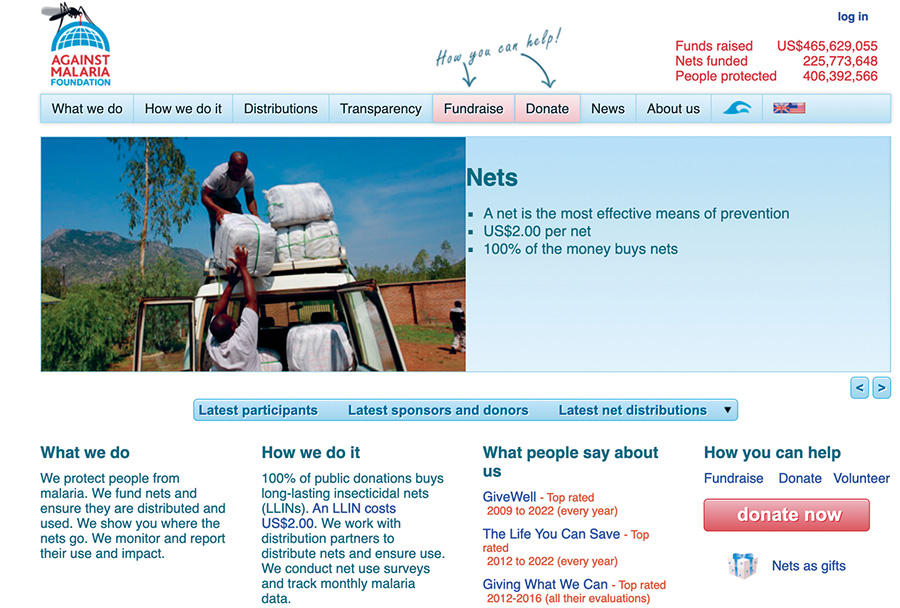
Figure 2.3 Landing page for the Against Malaria Foundation (www.againstmalaria.com)
Take the website of the Against Malaria Foundation. Not only does it look like it’s in need of a makeover—it’s a dot-com to boot. Turns out that the Against Malaria Foundation is a philanthropic organization that has won awards for its work eradicating malaria in Africa. For whatever reason, the organization has decided that buying more mosquito nets takes priority over upgrading its website.
When to use it
Evaluating political campaign websites for hidden agendas.
Assessing the credibility of news sources by looking past design quality.
Choosing a nonprofit to donate to by examining its work, records, and independent assessments beyond the design of its site.
Deciding whether to trust a product review based on the reviewer's presentation.
FROM THEORY TO EVERYDAY LIFE
In practice
Environmental website from logging industry
A website with pictures of snowcapped mountains and lush forests, claiming to safeguard the planet, might actually be from a logging industry site trying to deceive visitors.
Against Malaria Foundation website
A barebones, outdated website with a dot-com domain might belong to an award-winning charity like the Against Malaria Foundation, which prioritizes mosquito nets over web design.
A MOMENT TO REFLECT
Put it to work.
How might a sophisticated website design influence your initial trust in an organization?
When evaluating a new source of information, what steps can you take to look beyond first impressions?
Can you recall a time when a first impression led you astray, and how could you have avoided it?
CONTINUE THE CONVERSATION
Source texts
- Verified How to Think Straight, Get Duped Less, and Make Better Decisions about What to Believe Online (Mike Caulfield, Sam Wineburg)