Find Better Coverage
A heuristic for quickly verifying a claim by searching for coverage from reliable sources, instead of relying on a single source or initial reaction.
THE IDEA
Find Better Coverage
Consider a death-hoax claim: did Keanu Reeves really die in a snowboarding accident?
OK, well, hindsight is twenty-twenty. It’s fairly obvious that the actor who has since 2012 starred in a bunch of John Wick films and a Bill & Ted’s Excellent Adventure sequel did not die in a snowboarding accident in 2012. But it wasn’t obvious at the time, which is why quite a few people fell for it.
We come back to this case because it’s a good example of how a lot of what people have been taught to look for in a source fails—or, rather, makes them worse at the web than had no one taught them anything at all!
A quick search for other coverage would reveal that the story was fake (or at least misinformed).
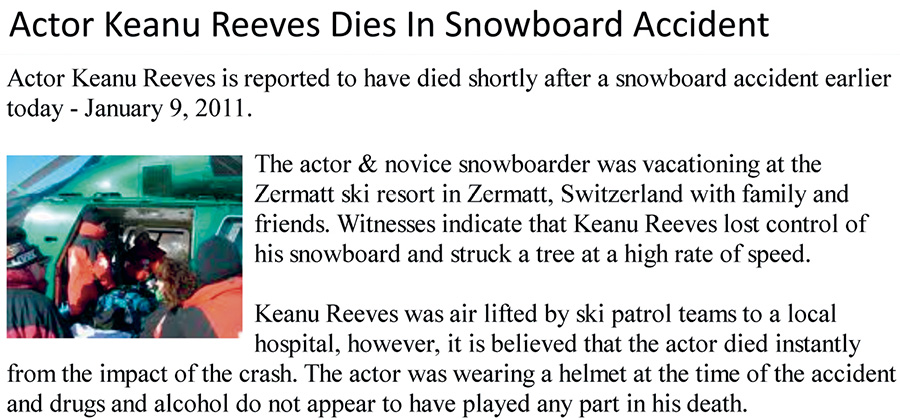
Figure 1.9 Story about Keanu Reeves “dying,” January 2011 (http://keanu.reeves.mediafetcher.com/news/top_stories/actor_skiing.php)
A short search here reveals top stories about Reeves, including a viral video where Reeves graciously answers a string of questions from a young fan at the airport, a behavior usually seen as incompatible with being dead. No stories about Keanu Reeves’s funeral. Had Reeves suffered a fatal accident, we would expect to see multiple stories about it, and fewer stories about heartwarming airport interactions. So, we can rule this out.
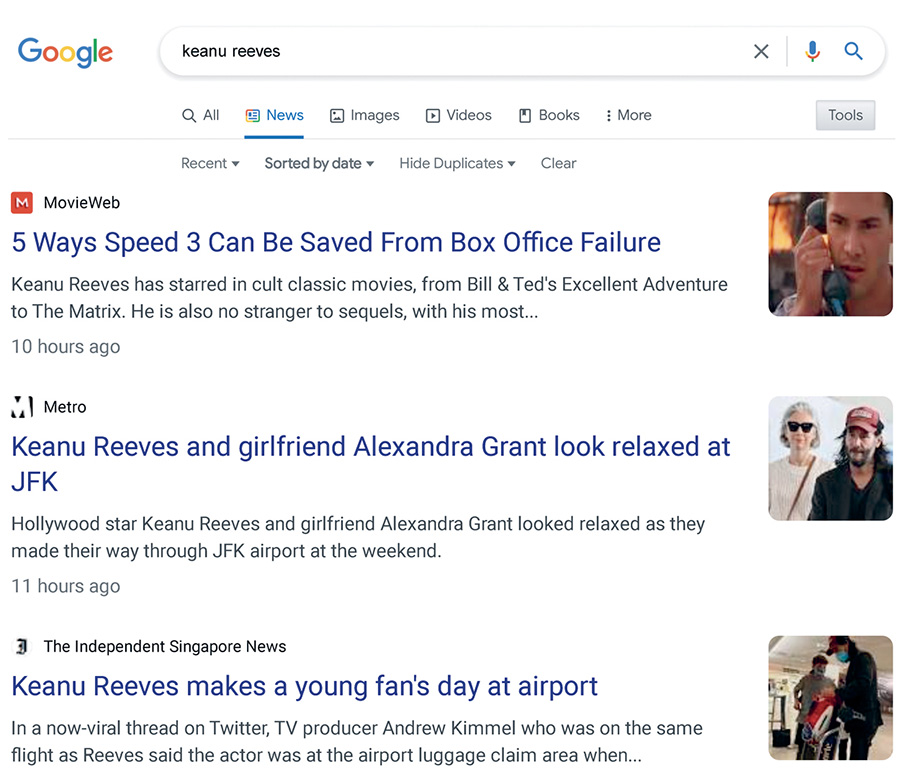
Figure 1.10 News search results for Keanu Reeves. (Google and the Google logo are trademarks of Google LLC.)
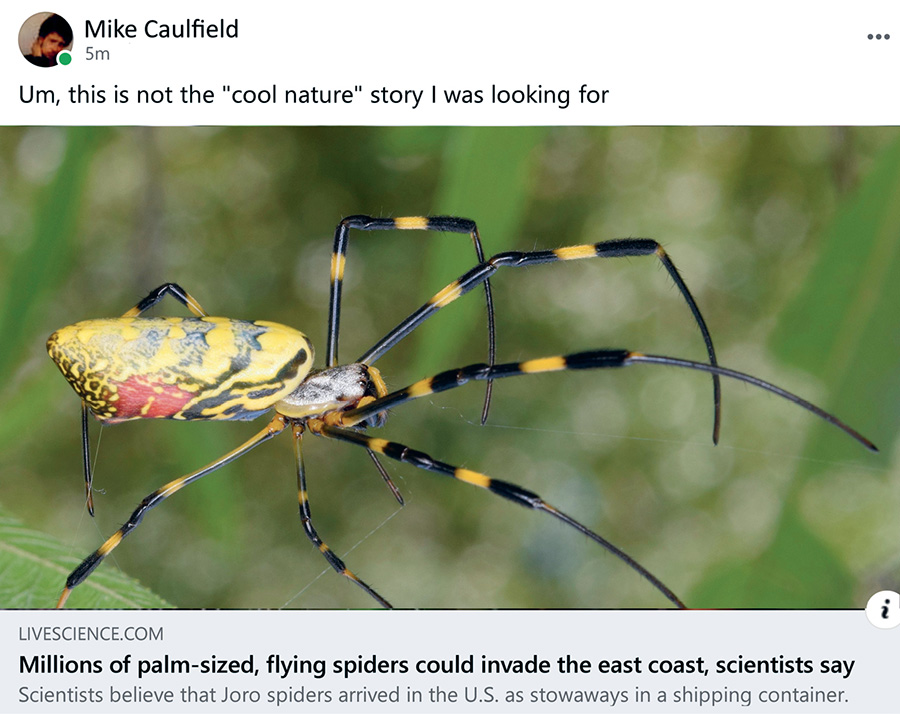
Figure 1.11 Mock-up of a Live Science story card, April 2022. (Photo by Christine Butler, licensed under Creative Commons Attribution 2.0.)
These quick checks are not just about debunking. In fact, one of the most common experiences we’ve had in this work is realizing that some sensational story that we had initially dismissed as false was actually true. Or at least somewhat true. Take this story about palm-sized spiders, flitting across Facebook in March 2022.13
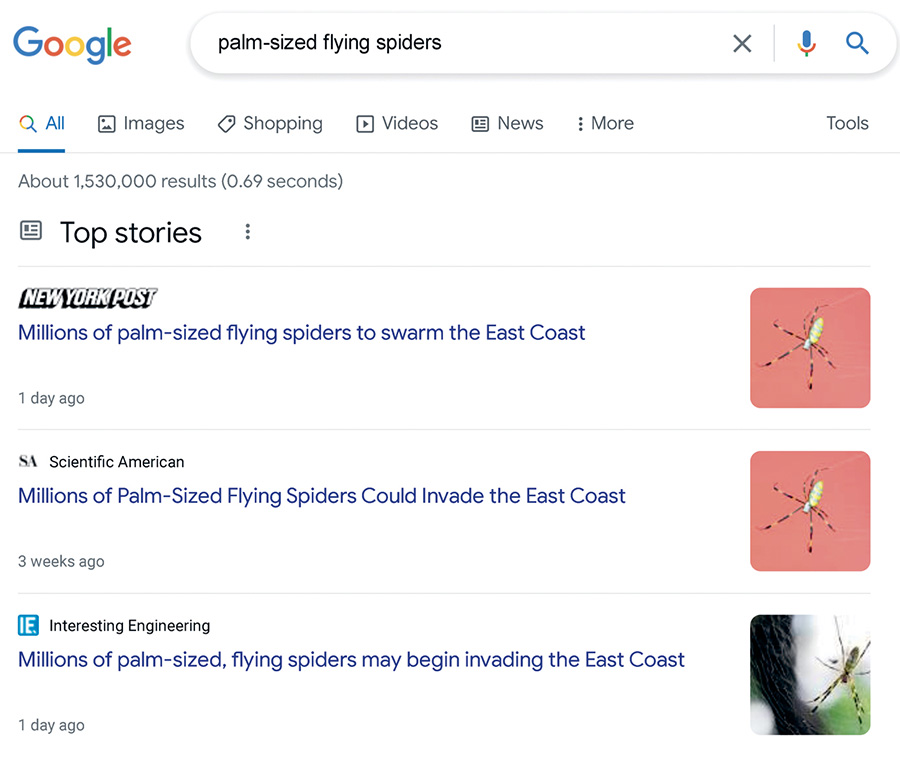
Figure 1.12 Search results for “palm-sized flying spiders” shortly after the first article was discovered, March 2022. (Google and the Google logo are trademarks of Google LLC.)
This can’t be true, right? Palm-sized, flying spiders? We apply our “find” move and get the results in figure 1.12.
While the first result may not be the best source of science information, the second result and many subsequent results not shown are from reliable publications. This spidery thing, whatever it is, looks like it may be happening.
Now note that when you get a result like this, you don’t stop here. If you are truly alarmed by palm-sized flying spiders, you want to click into the better articles and get the relevant context. Given that they are, well, palm-sized flying spiders, we thought this might be worth a few more minutes of our time, and so we clicked through the links. In this case, the story is a bit mixed. At the time of this account, reports suggested the spider could spread into the American Northeast. That said, clicking into the actual article may allay some of your fears. As the Scientific American article notes, “True to its mythical reputation, the Joro spider is stunning to look at, with a large, round, jet-black body cut across with bright yellow stripes, and flecked on its underside with intense red markings. But despite its threatening appearance and its fearsome standing in folklore, the Joro spider’s bite is rarely strong enough to break through the skin, and its venom poses no threat to humans, dogs or cats unless they are allergic.”14 Joro may even help reduce some other pests, such as mosquitos. So, is this post “true”? For something like this, that’s a limiting question. Rather, in our case, it might be more productive to say that we initially dismissed it as false, were slightly terrified to find out it might be true, then relieved to find out that it was not true in the way that we most feared. At each step of the way, we gathered the context around the claim (what do others say?), which helped to refine and improve our reaction to the story in a way that simply speculating on whether such spiders exist could never do.15
When to use it
Verifying a breaking news story that seems too extreme to be true.
Evaluating a health claim shared on social media before taking action or sharing it.
Deciding whether to trust a viral image or video by searching for contextual coverage.
Teaching students a practical method for online source evaluation beyond traditional checklist criteria.
FROM THEORY TO EVERYDAY LIFE
In practice
Keanu Reeves Death Hoax
A false claim that Keanu Reeves died in a snowboarding accident was debunked by searching for coverage of his recent activities, revealing a viral video of him interacting with fans at an airport and no news of his death.
Palm-Sized Flying Spiders
The authors initially doubted a sensational Joro-spider story. Coverage from sources such as Scientific American helped them separate the spider’s appearance and possible spread from its risk to people, including the qualification about allergic reactions.
A MOMENT TO REFLECT
Put it to work.
When you see a sensational claim online, what steps can you take to find better coverage before reacting?
How does the heuristic of 'finding better coverage' differ from simply checking if a single source is trustworthy?
Think of a recent news story that turned out to be misleading. What would have happened if you had applied this heuristic instead of sharing it immediately?
CONTINUE THE CONVERSATION
Source texts
- Verified How to Think Straight, Get Duped Less, and Make Better Decisions about What to Believe Online (Mike Caulfield, Sam Wineburg)