Difficulty Effect in Confidence Calibration
The difficulty effect is the tendency for confidence to exceed accuracy on hard tasks and fall short of accuracy on easy ones. One proposed explanation is that people attend more to the balance of arguments than to how much reliable evidence supports them.
THE IDEA
The Effect of Difficulty
One account suggests that people assess their confidence in one of two competing hypotheses on the basis of their balance of arguments for and against this hypothesis, with insufficient regard for the quality of the data. This mode of judgment gives rise to overconfidence when people form a strong impression on the basis of limited knowledge and underconfidence when people form a moderate impression on the basis of extensive data.
The application of this analysis to general-knowledge questions is complicated by the fact that strength and weight cannot be experimentally controlled as in Studies 1–3. However, in an analogy to a chance setup, let us suppose that the balance of arguments for a given knowledge problem can be represented by the proportion of red and white balls in a sample. The difficulty of the problem can be represented by the discriminability of the two hypotheses; that is, the difference between the probability of obtaining a red ball under each of the two competing hypotheses. Naturally, the greater the difference, the easier the task; that is, the higher the posterior probability of the more likely hypothesis on the basis of any given sample. Suppose confidence is given by the balance of arguments; that is, the proportion of red balls in the sample. What is the pattern of results predicted by this model?
Figure 13.6 displays the predicted results (for a sample of size 10) for three pairs of hypotheses that define three levels of task difficulty: an “easy” task where the probability of getting red balls under the competing hypotheses are .50 and .40, respectively; a “difficult” task, in which the probabilities are .50 and .45; and an “impossible” task, in which the probability of drawing a red ball is .5 under both hypotheses. We have chosen nonsymmetric hypotheses for our example to allow for an initial bias that is often observed in calibration data.
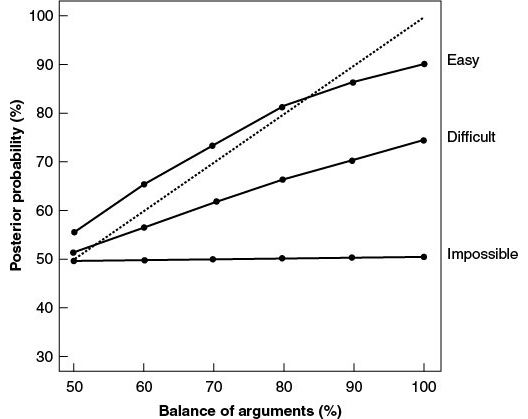
Figure 13.6. Predicted calibration for item difficulty.
It is instructive to compare the predictions of this model to the results of Lichtenstein and Fischhoff (1977) who investigated the effect of task difficulty (Fig. 13.7). Their “easy” items (accuracy = 85%) produced underconfidence through much of the confidence range, their “difficult” items (accuracy = 61%) produced overconfidence through most of the confidence range, and their “impossible” task (discriminating European from American handwriting, accuracy = 51%) showed dramatic overconfidence throughout the entire range.
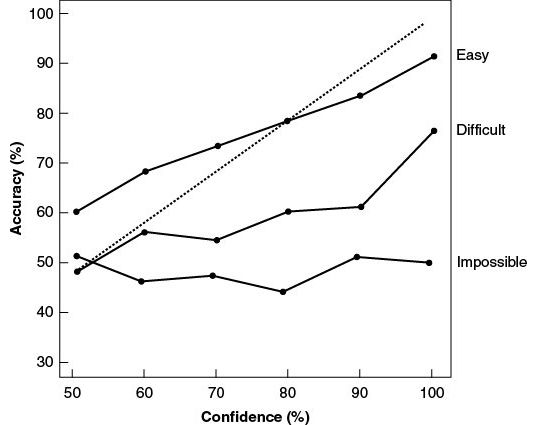
Figure 13.7. Calibration plots for item difficulty.
A comparison of Figs. 13.6 and 13.7 reveals that our simple chance model reproduces the pattern of results observed by Lichtenstein and Fischhoff (1977): slight underconfidence for very easy items, consistent overconfidence for difficult items, and dramatic overconfidence for “impossible” items. This pattern follows from the assumption that judged confidence is controlled by the balance of arguments for the competing hypotheses. The present account, therefore, can explain the observed relation between task difficulty and overconfidence (see Ferrell & McGoey, 1980).
The difficulty effect is one of the most consistent findings in the calibration literature (Lichtenstein & Fischhoff, 1977; Lichtenstein, Fischhoff, & Phillips, 1982; Yates, 1990). It is observed not only in general-knowledge questions, but also in clinical diagnoses (Oskamp, 1962), predictions of future events (contrast Fischhoff & MacGregor, 1982, versus Wright & Wisudha, 1982), and letter identification (Keren, 1988). Moreover, the difficulty effect may contribute to other findings that have been interpreted in different ways. For example, Keren (1987) showed that world-class bridge players were well calibrated, whereas amateur players were overconfident. Keren interpreted this finding as an optimism bias on the part of the amateur players. In addition, however, the professionals were significantly more accurate than the amateurs in predicting the outcome of bridge hands and the difference in difficulty could have contributed to the difference in overconfidence.
The difficulty effect can also explain the main finding of a study by Gigerenzer, Hoffrage, and Kleinbolting (1991). In this study, subjects in one group were presented with pairs of cities and asked to choose the city with the larger population and indicate their confidence in each answer. The items were randomly selected from a list of all large West German cities. Subjects in a second group were presented with general-knowledge questions (e.g., “Was the zipper invented before or after 1920?”), instructed to choose the correct answer, and to assess their confidence in that answer. Judgments about the population of cities were fairly well calibrated, but responses to the general-knowledge questions exhibited overconfidence. However, the two tasks were not equally difficult: average accuracy was 72% for the city judgments and only 53% for the general-knowledge questions. Hence, the presence of overconfidence in the latter but not in the former could be entirely due to the difficulty effect, documented by Lichtenstein and Fischhoff (1977). Indeed, when Gigerenzer et al. (1991) selected a set of city questions that were matched in difficulty to the general-knowledge questions, the two domains yielded the same degree of overconfidence. The authors did not acknowledge the fact that their study confounded item generation (representative versus selective) with task difficulty (easy versus hard). Instead, they interpreted their data as confirmation for their theory that overconfidence in individual judgments is a consequence of item selection and that it disappears when items are randomly sampled from some natural environment.
When to use it
When evaluating expert opinions, compare confidence with the expert’s record on tasks of similar difficulty.
Designing training programs to improve calibration: include tasks of varying difficulty to teach proper confidence assessment.
In decision analysis, adjust for the difficulty effect when interpreting probability estimates from judges.
In education, using calibration tasks to help students recognize when they are over- or under-confident.
FROM THEORY TO EVERYDAY LIFE
In practice
General Knowledge Questions
In Lichtenstein and Fischhoff (1977), easy items (85% accuracy) produced underconfidence, difficult items (61% accuracy) produced overconfidence, and impossible items (distinguishing European from American handwriting, 51% accuracy) showed dramatic overconfidence.
Bridge Players
Keren (1987) found that world-class bridge players were well calibrated whereas amateurs were overconfident; this may be partly due to difficulty differences.
City Population vs. General Knowledge
Gigerenzer et al. (1991) found that city population judgments were well calibrated (72% accuracy) while general knowledge questions showed overconfidence (53% accuracy), but when difficulty was matched, overconfidence equalized.
A MOMENT TO REFLECT
Put it to work.
Think of a task you are an expert at and a task you are a novice at. How does your confidence compare? Does the difficulty effect explain the difference?
When you are highly confident in a judgment, do you tend to ignore the possibility that the evidence is weak? How can you adjust for this tendency?
Consider a time when you were underconfident in an easy task. What might have caused you to doubt yourself?
Often confused with
References
- The effect of task difficulty on probability calibration — Lichtenstein, S. & Fischhoff, B. (1977)
- Calibration of probabilities: The state of the art — Lichtenstein, S., Fischhoff, B., & Phillips, L. D. (1982)
- Judgment and decision making — Yates, J. F. (1990)
- Overconfidence in clinical diagnoses — Oskamp, S. (1962)
- Prediction of future events — Fischhoff, B. & MacGregor, D. (1982)
- Predictive judgment — Wright, G. & Wisudha, A. (1982)
- Calibration of bridge players — Keren, G. (1987)
- Letter identification and confidence — Keren, G. (1988)
- Ecological rationality and overconfidence — Gigerenzer, G., Hoffrage, U., & Kleinbolting, H. (1991)
- A model of calibration — Ferrell, W. R. & McGoey, P. J. (1980)
CONTINUE THE CONVERSATION
Source texts
- Heuristics and Biases The Psychology of Intuitive Judgment (Thomas Gilovich, Dale Griffin, Daniel Kahneman)