Decoding Google’s Knowledge Panel
A knowledge panel can provide leads about an unfamiliar source’s identity and background. Check those details and the article’s evidence before deciding whether to trust a particular claim.
THE IDEA
“Australian Birds Have Weaponized Fire” comes up on your social media feed from a source you don’t recognize—the National Post.1 You notice a little maple leaf poking its head out between “National” and “Post.” Could this be Canada’s version of The Onion?
Googling the National Post provides you with scannable intel.
In the book’s example, Google gathers information from sources such as Wikipedia, the CIA’s World Factbook, LinkedIn, and other websites into a “knowledge panel” on the right of the results. The fact that our source comes with a knowledge panel doesn’t mean we can blindly trust it or that its claims are true. The panel provides leads for checking the paper’s identity and history; its presence alone does not establish either reliability or longevity.
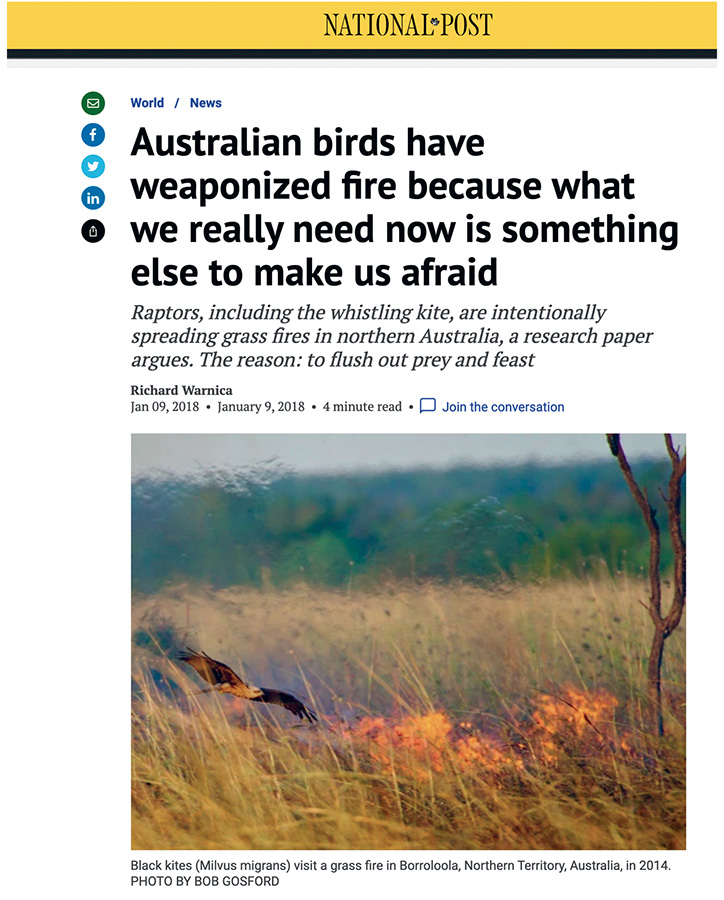
Figure 3.6 Article from Canada’s National Post (https://nationalpost.com/news/world/australian-birds-have-weaponized-fire)
The panel shown in the book makes no mention of satire or conspiracy theories. It lists the National Post as founded in 1998, headquartered in Toronto, and having a circulation of 142,509. These details help identify the source; absence of a warning is not a reliability rating.
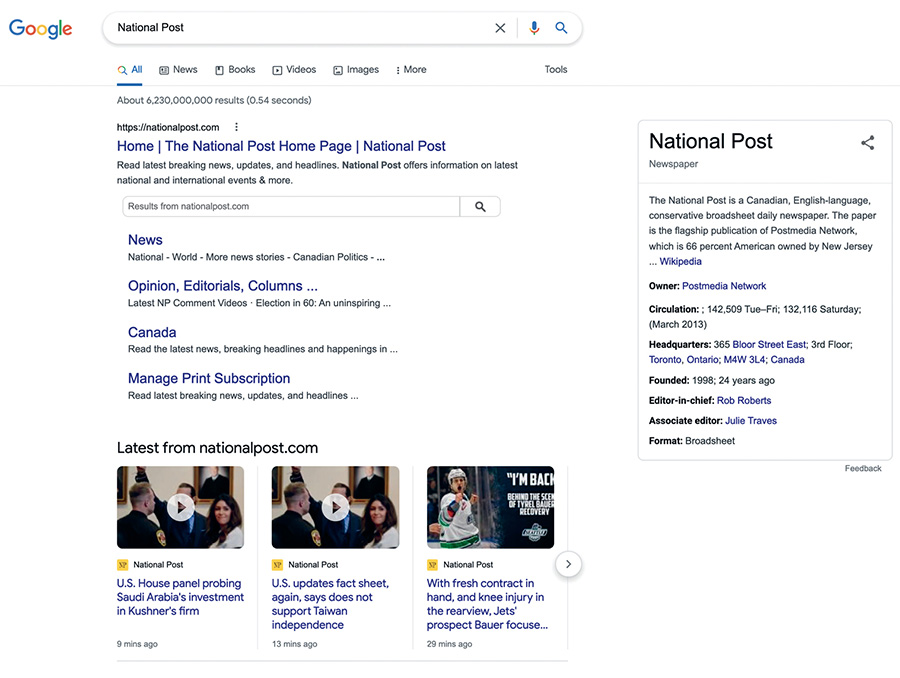
Figure 3.7 Google’s knowledge panel for the National Post. (Google and the Google logo are trademarks of Google LLC.)
This is enough to give that story about fire-starting birds a second look. Who knew? The National Post story even links to a scholarly paper from something called the Journal of Ethnobiology: “Intentional Fire-Spreading by ‘Firehawk’ Raptors in Northern Australia.”2 So, watch out for brazen birds bearing embers. For squirrelantulas, watch out for Photoshop.
When to use it
Checking the credibility of a viral news story on social media
Verifying the background of a website before citing it in academic work
Deciding if a new blog or publication is worth following
Finding background leads about a publication, including whether other sources describe it as satire.
FROM THEORY TO EVERYDAY LIFE
In practice
Evaluating the National Post
In the book’s example, a knowledge panel lists the National Post as founded in 1998, based in Toronto, and having a circulation of 142,509. The details offer a starting point for identifying the newspaper. The next step is to examine the fire-spreading birds story and the research it cites.
A MOMENT TO REFLECT
Put it to work.
When you encounter a news article from an unfamiliar source, what key information would you look for in its knowledge panel to decide whether to trust it?
How might relying solely on knowledge panels be insufficient for evaluating deeply misleading sources?
In what scenarios might a knowledge panel be misleading or incomplete?
CONTINUE THE CONVERSATION
Source texts
- Verified How to Think Straight, Get Duped Less, and Make Better Decisions about What to Believe Online (Mike Caulfield, Sam Wineburg)